












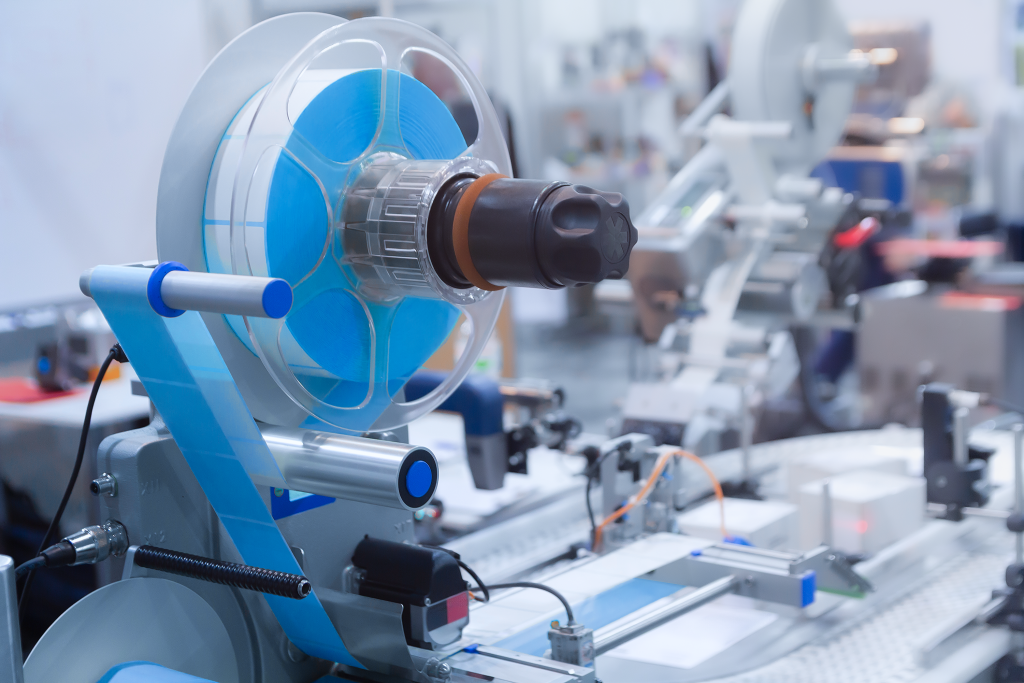
Cleanroom labels that stay readable, stay put, and leave nothing behind when removed.
Engineered for the surfaces, cleaning methods, and handling in your controlled environment. We’ll help with specifications, samples, pricing, and fit with your printers and applicators.
Only your name and email are required · An engineer replies within one business day.
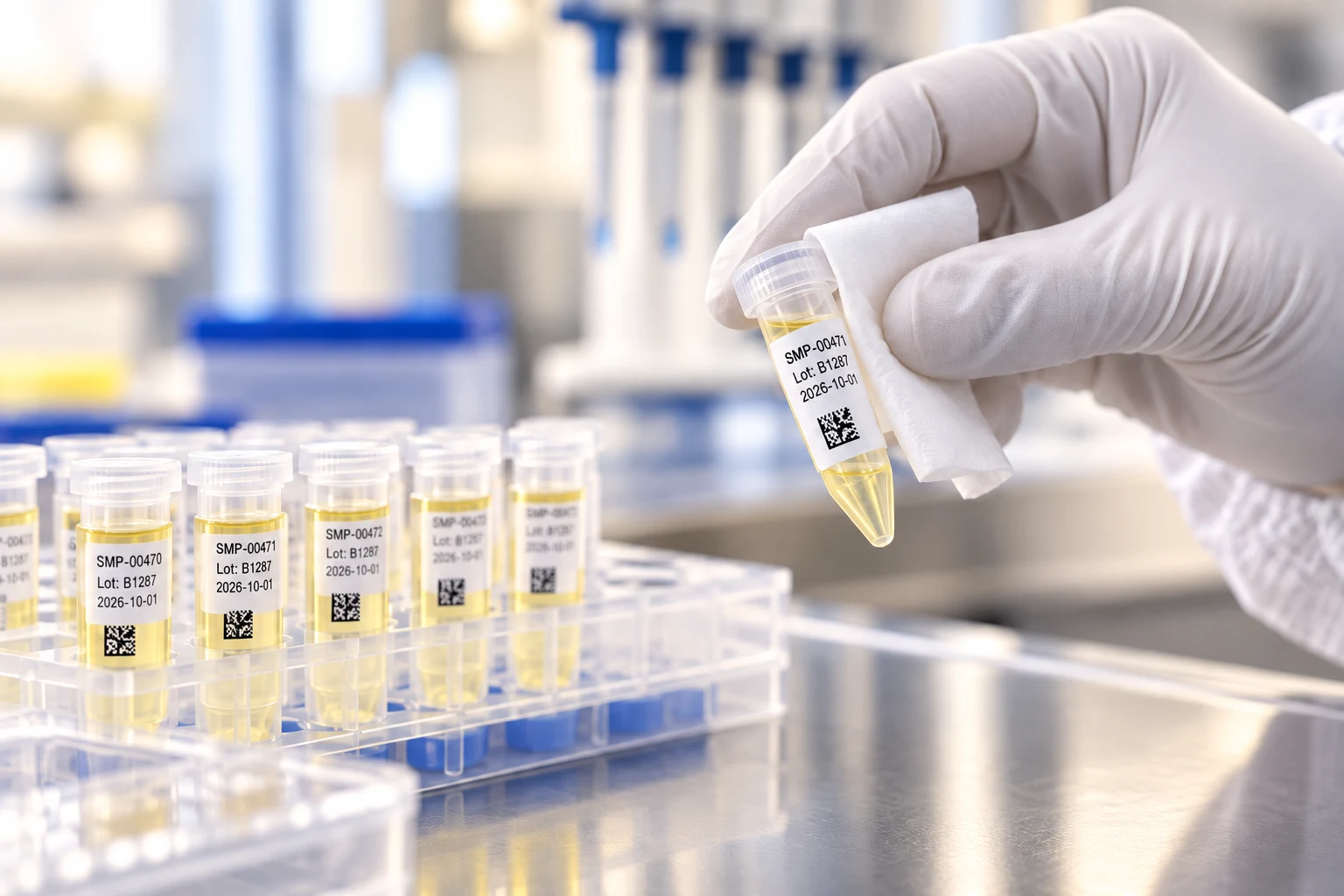
What are cleanroom labels?
Cleanroom labels are identification labels made for cleanrooms and other controlled environments, where ordinary paper labels can shed particles, outgas, or leave adhesive residue. They use non-shedding, low-particulate synthetic materials, low-outgassing adhesives, and low-residue constructions. They are wound on plastic cores instead of cardboard and can be double-bagged for transfer into the cleanroom.
Common uses include wafer carriers and boxes, vials and sample containers, totes, equipment, and materials entering a cleanroom. Many must also withstand repeated cleaning with agents like IPA, stay readable after exposure, or remove cleanly from reusable surfaces.
Common starting points for cleanroom label projects.
What does your cleanroom label need to do?
Explore the requirements that matter to your process. You can share any you already know in the optional details of your request.
Control particle and material concerns
Include your cleanroom classification and restrictions on particles, material emissions, liners, and cores.
Remain readable through cleaning
Account for cleaning agents, repeated wiping, and text or barcode performance after exposure.
Stay attached—or remove cleanly
Consider the surface at application and whether the label stays in place or comes off after use.
Support controlled handling and entry
Consider transfer procedures, synthetic components, double-bagging, or sterile supply requirements.
Supplied to fit the way you work.
Dimensions, configuration, and packaging can be matched to your equipment and process. You can note your preferred format in your request.
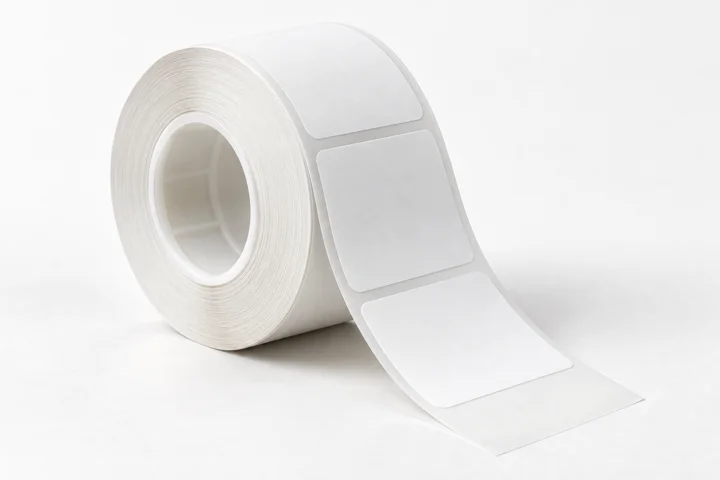 Roll labelsDie-cut for printing, dispensing, or application.
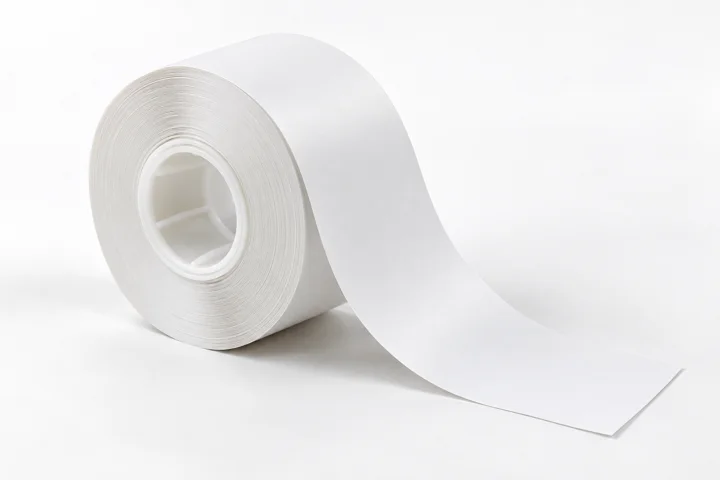 Continuous rollsContinuous media for your printing workflow.
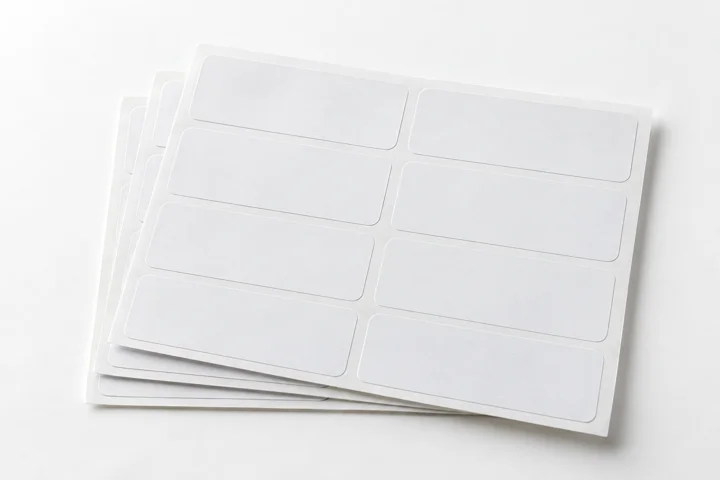 SheetsSheeted labels for manual application.
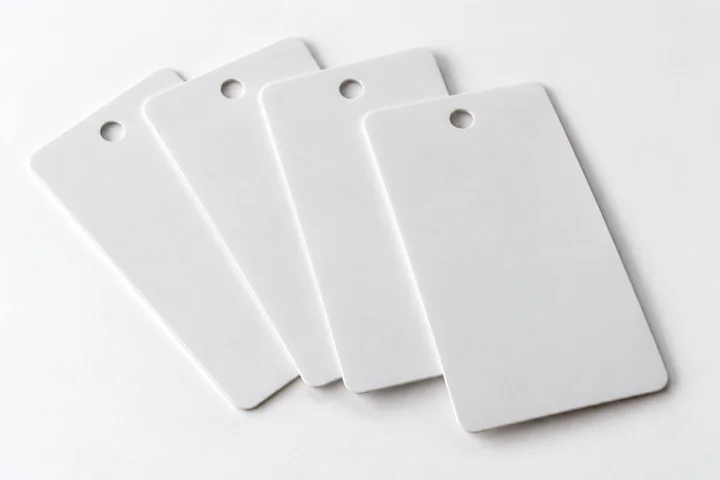 TagsIdentification without an adhesive label.
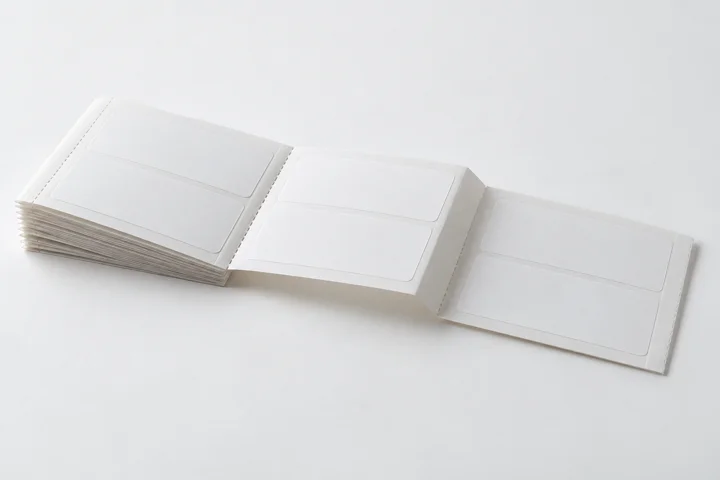 FanfoldedFolded media for compatible equipment.
Not sure which format fits? Choose “Not sure—please advise” in the optional details, or leave it blank.
Cleanroom handling. IPA cleaning. Liquid nitrogen storage. One label.
The challenge
A cell therapy application needs cryovial labels that remain attached and readable through cleanroom handling, a 70% IPA wipe-down, and liquid nitrogen storage at −196 °C. Edge lifting or unreadable barcodes on retrieval could compromise identification.
What we consider
The full sequence matters: the vial surface, application temperature, time allowed for the adhesive to bond, cleaning exposure, and freezing conditions. A label needs to perform through the complete process.
How we help
We recommend a label material, adhesive, and printing system to evaluate together—including compatibility with the customer’s printer. Samples are tested through the actual application, wipe-down, freezing, and retrieval sequence.
What success looks like
Labels remain attached, information stays readable, and barcodes scan after retrieval—meeting the customer’s acceptance criteria before production approval.
What do you need next?
Request specifications, samples, pricing, or help choosing. Start with what you know.
A short conversation to review your application and clarify the next step. Bring what you know—no completed specification needed.
From first question to consistent supply.
A recommended starting point.
Share what you know. An engineer replies within one business day to clarify your application, identify gaps, and recommend a construction when enough information is available.
Samples and supporting data.
Test in your process. Evaluate samples for adhesion, readability, scanning, and clean removal where needed through your actual cleaning, storage, and handling. We provide data sheets to support your qualification.
An agreed specification and supply plan.
Confirm pricing, dimensions, quantity, configuration, packaging, and lead time before production. We deliver on time, in full, and in spec.
Support for your approved specification.
We maintain your approved specification, order after order. If your surfaces, cleaners, printers, or application equipment change, we review the label with you.
Questions about cleanroom labels.
Can I get samples before committing to production?
Yes, samples are available to test on your own surfaces before you commit to production. Describe your application and an engineer will recommend a construction and send samples suited to your cleaning, storage, and handling process.
What do you need to quote pricing?
Pricing is based on label size, quantity, printing, supply format, and packaging. Send whatever you know. An engineer will confirm the remaining details and prepare the quotation.
What are your minimum order quantities and lead times?
Minimums and lead times depend on the construction, printing, and packaging your application needs. Both are confirmed with your quotation, and stocked constructions typically ship faster than fully custom ones.
How are cleanroom labels different from standard labels?
Standard labels are usually paper on cardboard cores, which can shed particles, outgas, and leave adhesive residue. Cleanroom labels use non-shedding synthetic materials, low-outgassing and low-residue adhesives, and plastic cores, and they can be double-bagged for transfer into a controlled environment.
Can cleanroom labels withstand IPA and other cleaning agents?
Yes, cleanroom labels can be built to stay attached and readable through repeated wiping with IPA, bleach, hydrogen peroxide, and other common disinfectants. The right construction depends on the agent, its concentration, and how often the label is cleaned, and we match the label to that combination.
What adhesive options are available?
Cleanroom labels are available with permanent, removable, and ultra-removable adhesives. Permanent adhesives keep labels attached for long-term tracking, and removable options peel cleanly from stainless steel, glass, and reusable containers without leaving residue. We select the adhesive based on your surface, how long the label stays on, and what it goes through before removal.
How can cleanroom labels be printed?
Cleanroom labels can be printed by thermal transfer, direct thermal, laser, or inkjet, or supplied preprinted. Thermal transfer gives the most durable text and barcodes through cleaning. Direct thermal needs no ribbon but is more sensitive to heat and chemicals. We confirm compatibility with your printer model and ribbon or ink. Explore printable labels →
How are labels packaged for cleanroom entry?
Cleanroom labels can be double-bagged and supplied on plastic cores with synthetic liners, so no paper or cardboard enters the controlled area. Packaging is configured to match your transfer and entry procedures.
Are cleanroom labels sterile?
Cleanroom labels are not necessarily sterile; cleanroom-compatible and sterile are separate requirements. When sterility is required, CleanMark supplies gamma-irradiated sterile labels processed in its Class 100 cleanroom.
What documentation can you provide?
Technical data sheets are available for every CleanMark construction. CleanMark is ISO 9001:2015 certified, and we can provide the documentation your qualification process requires.
Let’s find the right label for your process.
Get specifications, samples, or pricing. Share what you know—we’ll help clarify the rest.
Only your name and email are required · An engineer replies within one business day.

