












About
Because what your labels are attached to matters.
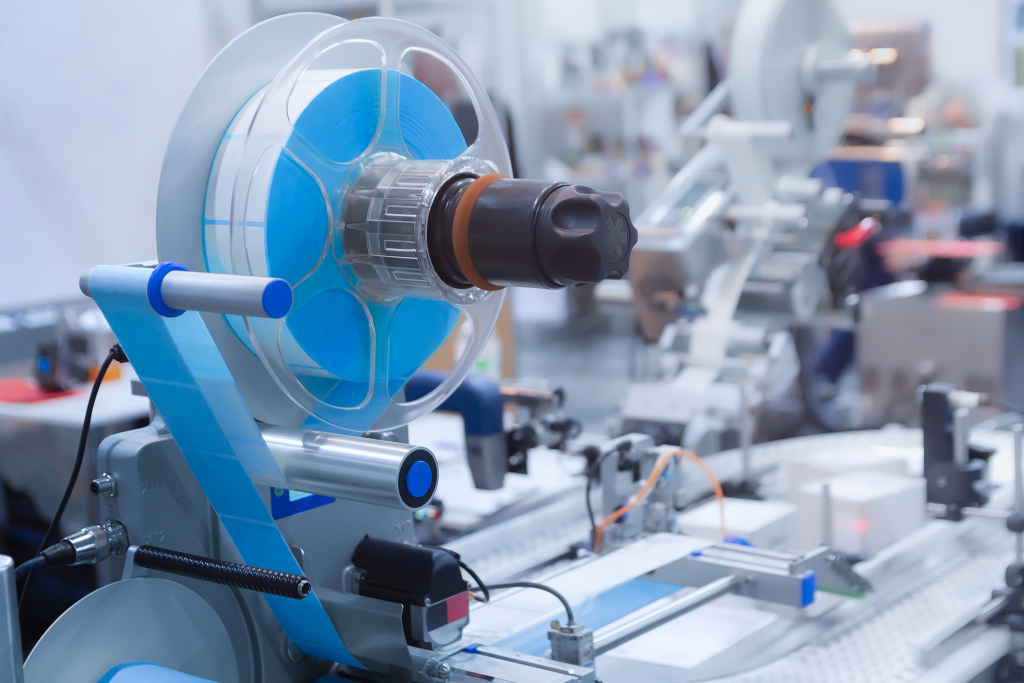
A label is a small part of something much bigger.
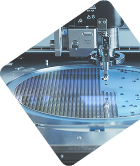
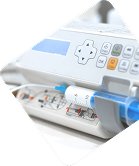
It might identify a semiconductor component, a pharmaceutical product, or material that must remain traceable through demanding conditions. Most of the time, a label isn’t something anyone gives much thought to—until it doesn’t work. That understanding has shaped the way we approach our work.
A different way of looking at labels.
Over the years, we’ve worked with customers whose labeling challenges aren’t always solved by choosing a product from a catalog.
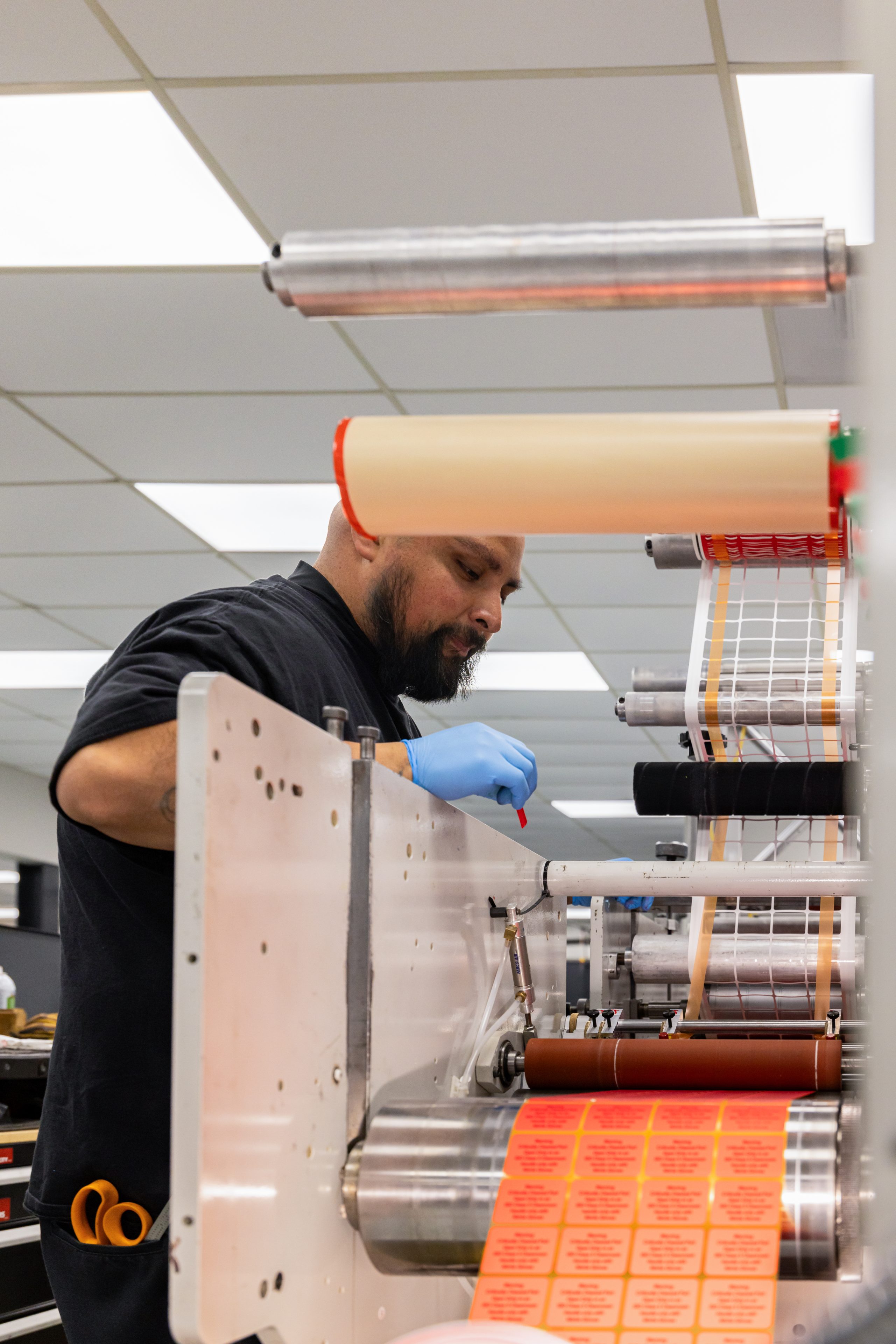
We’ve learned that a label never performs in isolation. It has to work with the equipment that prints and applies it, the surface it adheres to, the conditions it encounters, and the process it supports. We don’t manufacture printers, ribbons, or applicators; our job is to make the label work within that larger system.
That perspective has guided our work in material selection, application engineering, testing, and precision converting. It serves customers across semiconductor, pharmaceutical, biotech and life sciences, medical device, and advanced manufacturing.
Quality begins long before production.
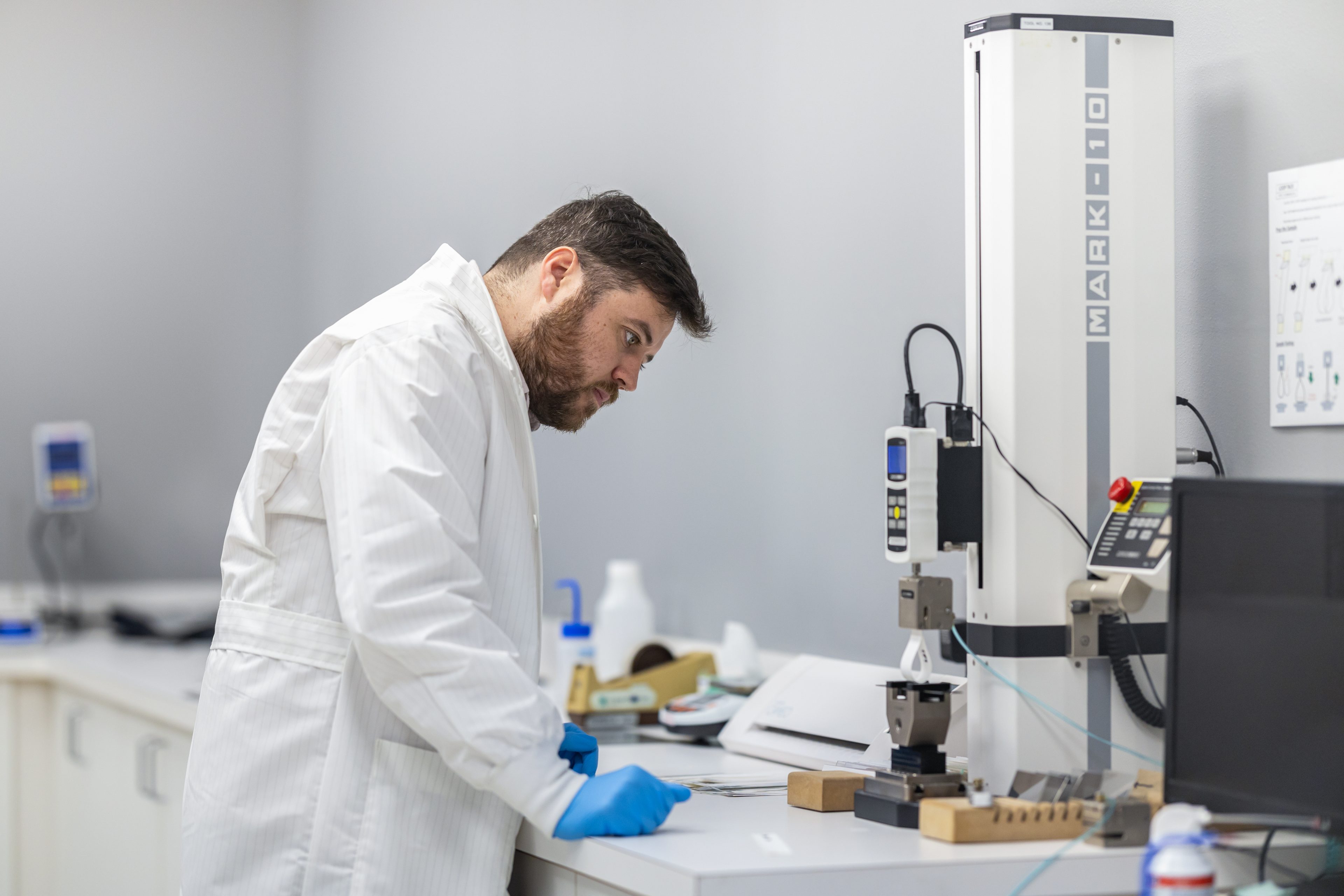
Understanding what can happen when a label fails changes the questions we ask. What happens if identification is lost? If a label separates in transit? If information becomes unreadable after sterilization or cleaning?
Those questions guide how we define requirements, select materials, support evaluation, and control our converting processes. Quality is not simply a final inspection; it begins with understanding the work a label must support.
Meeting a specification matters. Understanding what that specification protects matters just as much.
Reliability is built into how we operate.
Our customers plan production, validation, and shipments around the labels we supply. When an order is late, incomplete, or inconsistent, the consequences can extend well beyond the labels themselves.
That is why we keep examining how work moves through our facility, how effectively we use capacity, and how consistently our processes perform. Dependable supply is something we work to build into the operation—not something we leave to last-minute effort.
Built to respond when plans change.
We look for delays in production flow, make thoughtful use of available capacity, and develop flexibility across manufacturing roles. The aim is to respond to changing requirements and urgent needs while protecting work already in progress.
The same commitment, every run.
Defined setups, documented job requirements, and controlled changes support consistency. We treat quality as a responsibility throughout the operation, so issues can be addressed as close as possible to where they arise.
Making room for what comes next.
Material evaluation, prototyping, and application engineering help us develop new label constructions while planning around ongoing production needs. We keep improving how development and manufacturing work together.
A philosophy put into practice.
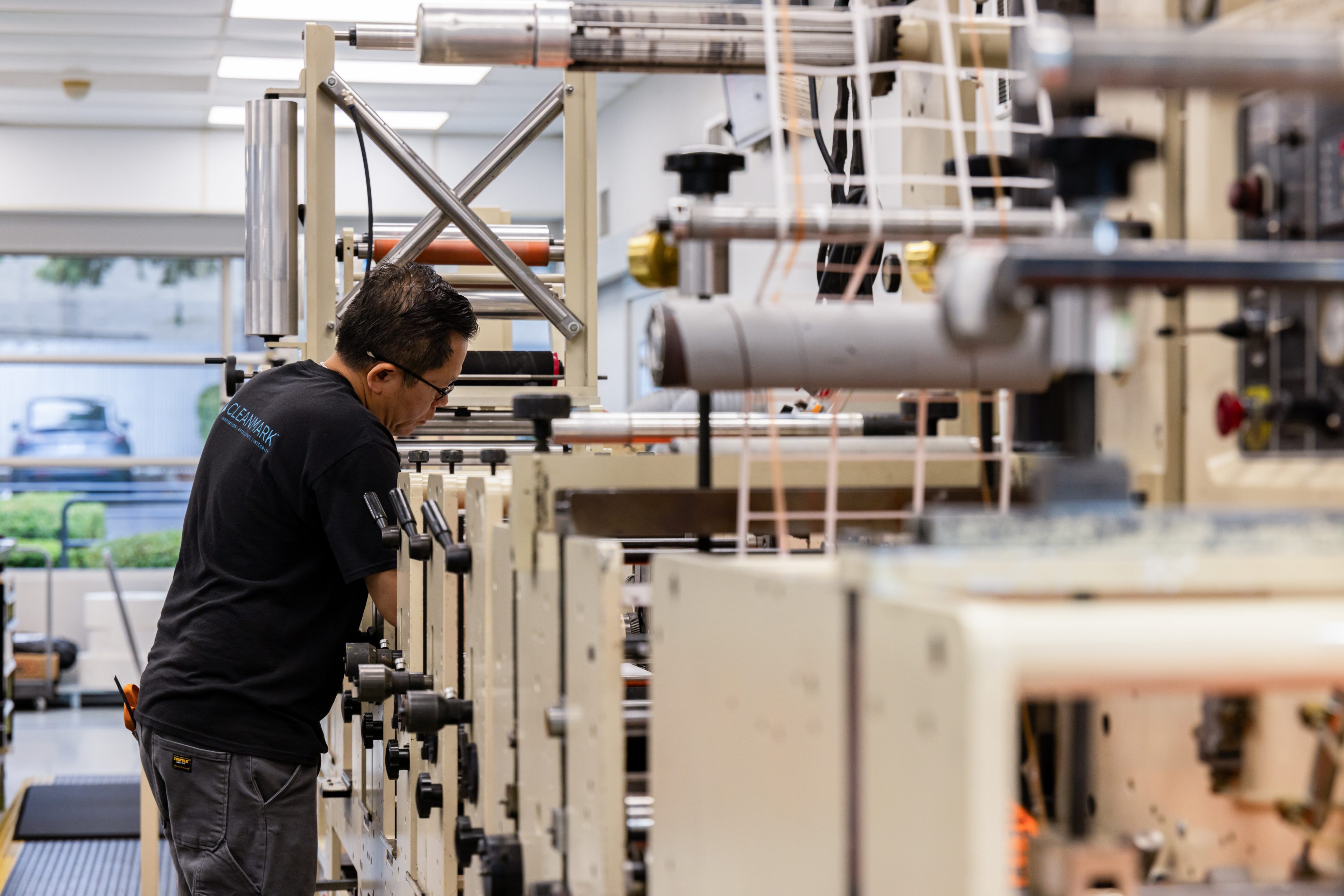
Our capabilities have grown around the problems customers bring us. Today, as a custom label converter, we combine material selection, application engineering, testing, labelstock assembly, and precision converting.
Our in-house ISO Class 5 cleanroom supports applications requiring controlled manufacturing. These are not capabilities for their own sake; they are ways to bring more care, control, and consistency to the work.
ISO 9001:2015 certified · RoHS compliant · Download credentials
Seven-time TLMI Eugene Singer Award recipient
TLMI grants the Eugene Singer Award for Management Excellence, recognizing disciplined management and operational performance.
The results matter more than the label.
We make labels. But the measure of our work extends beyond the labels themselves. It shows up in a qualification that moves forward with less friction, a label that performs as intended, and an order that arrives when it is needed. That is what we keep working to improve.

