














Labeling Is a System, Not a Sticker
Prevent labeling failures before they disrupt production, traceability, workflow reliability, or product integrity.
Find the right labels
- Share your application
- Get expert guidance
- Move forward with confidence

Develop your label system the right way
When labels must perform under real operating conditions, selecting a material from a catalog is rarely enough.
CleanMark helps organizations evaluate, prototype, refine, and implement labeling systems designed around where they will actually be used — your environments, workflows, printers, applicators, surfaces, and operating conditions. Long-term operational success is shaped by how all of these factors interact across your labeling landscape.
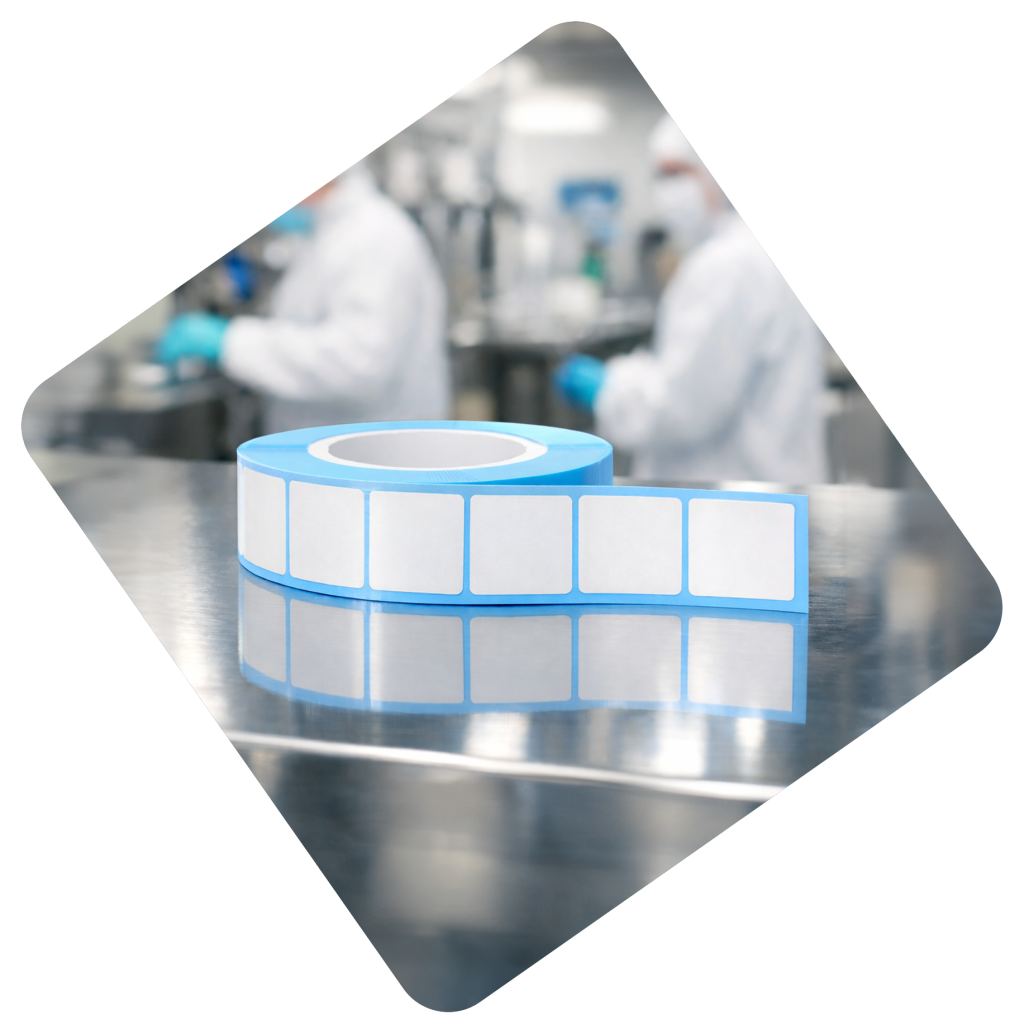
For decades, CleanMark has supported contamination-sensitive, sterile, durable, and high-performance labeling applications for semiconductor, pharmaceutical, medical device, laboratory, and industrial manufacturers.
The label is rarely the only problem
Most labeling failures are not caused by a single material issue. They are caused by the interaction between surfaces, printers, applicators, environments, workflows, handling conditions, and long-term operating exposure. A label may appear acceptable during early testing, then fail later during cleaning, sterilization, automation, storage, production scale-up, or day-to-day operational use. What appears to be a label problem is often a systems problem.
Label performance is shaped by the interaction of multiple variables
A labeling system that performs reliably in one workflow may fail completely in another using the exact same label construction.
What appears to be a simple label decision is often the interaction of materials, equipment, environments, and workflow conditions over time.
That is why CleanMark evaluates the entire operational system surrounding the label — not simply whether the label initially sticks during early testing.
- Environment + Surface
Temperature • Chemicals • Moisture • Cleanliness • Material Type - Label Construction
Facestock • Adhesive • Topcoat • Durability Requirements - Print System
Printer • Ribbon • Heat Settings • Barcode Requirements - Application Workflow
Automation • Applicators • Throughput • Handling Conditions - Operational Use
Cleaning • Abrasion • Storage • Human Interaction • Long-Term Exposure - Operational Reliability
Traceability • Readability • Adhesion • Workflow Consistency
How companies typically find us
Most companies do not start by searching for durable labels. They start because labeling is creating operational friction. The labels may appear to work initially, but problems begin emerging as environments become more demanding, production scales, or processes evolve.
The workarounds that once kept operations moving are no longer reliable. That is often when companies engage CleanMark.

Existing processes begin creating labeling failures
You may already have printers, ribbons, applicators, and workflows in place, but small mismatches between the label, surface, environment, or equipment can begin creating issues later during cleaning, handling, automation, storage, or long-term use.
The workarounds that once kept things moving may no longer be reliable as processes scale, environments change, or operational demands increase.
Labels may start peeling, smearing, leaving residue, failing scans, or performing inconsistently across shifts, facilities, or operating conditions.

New processes introduce new variables
New processes often introduce new label functions, performance requirements, and operational goals.
Changes to cleaning procedures, chemicals, automation, sterilization methods, packaging formats, handling requirements, or production speeds can create conditions that existing labeling systems were never designed to support.
What worked previously may no longer perform reliably under the new workflow, environment, or process expectations.

New products require intentional labeling design
Many organizations engage CleanMark early during product development to help align the labeling system with the intended environment, workflow, compliance requirements, and long-term operating conditions before production scale-up begins.
Early evaluation often helps reduce implementation risk, repeated trial-and-error, and downstream operational disruption.

Reliability becomes inconsistent at scale
A labeling solution may work during limited testing, but begin creating variability once exposed to full production throughput, operator variation, environmental stress, cleaning cycles, or long-term use.
Future-proofing a labeling system means evaluating not only whether the label works today, but whether it will continue performing reliably as processes evolve, production scales, and operational demands increase.
In many cases, the challenge is not caused by a single variable, but by how multiple variables interact together over time.
Inconsistency creates hidden operational risk
In many organizations, labeling processes evolve independently across sites, labs, departments, production lines, and teams over time.
Labels may be purchased differently, specified differently, printed differently, applied differently, or evaluated differently depending on the location, operator, supplier, or workflow involved.
Quality issues may also be handled inconsistently — with temporary workarounds, local fixes, undocumented changes, or different testing standards across facilities.
Over time, this variability can create:
- Inconsistent labeling performance
- Operational inefficiencies
- Higher troubleshooting and support burden
- Increased training complexity
- Greater compliance and traceability risk
- Difficulty scaling standardized processes across facilities
This becomes especially common in larger organizations operating across multiple manufacturing sites, laboratories, or production environments.
CleanMark can help evaluate opportunities to reduce variability, close process gaps, and create more consistency across labeling systems, workflows, materials, print systems, and operational expectations.
The goal is not simply standardization for its own sake.
The goal is creating a more reliable, scalable, and repeatable labeling system across the organization.

The hidden cost is rarely the label itself
A label failure in the wrong environment rarely stays isolated. What begins as a small adhesion, print, or scanning issue can quickly become:
- Production
downtime - Relabeling
labor - Traceability
gaps - Product holds
and rework - Workflow
slowdowns - Validation
delays - Equipment
inefficiencies - Contamination
concerns - Audit
findings - Delayed
product launches
In contamination-sensitive and regulated environments, the impact may extend even further into product integrity, manufacturing continuity, compliance confidence, research accuracy, or patient safety.
The real cost is usually not the label itself. The real cost is operational disruption.
We evaluate the full labeling system
A label does not operate independently. Its performance is influenced by everything around it — including printers, ribbons, applicators, surfaces, environmental exposure, workflow variability, and long-term handling conditions. That is why CleanMark evaluates the full operational system surrounding the label, not simply the material itself.
Printers & Print Systems
Printer performance is one of the most overlooked variables in labeling reliability.
Small differences in heat settings, ribbon compatibility, print speed, sensor calibration, or label construction can dramatically affect print durability, barcode readability, feeding consistency, and long-term performance.
A label that performs well during early testing may behave very differently once exposed to full production throughput or environmental stress.
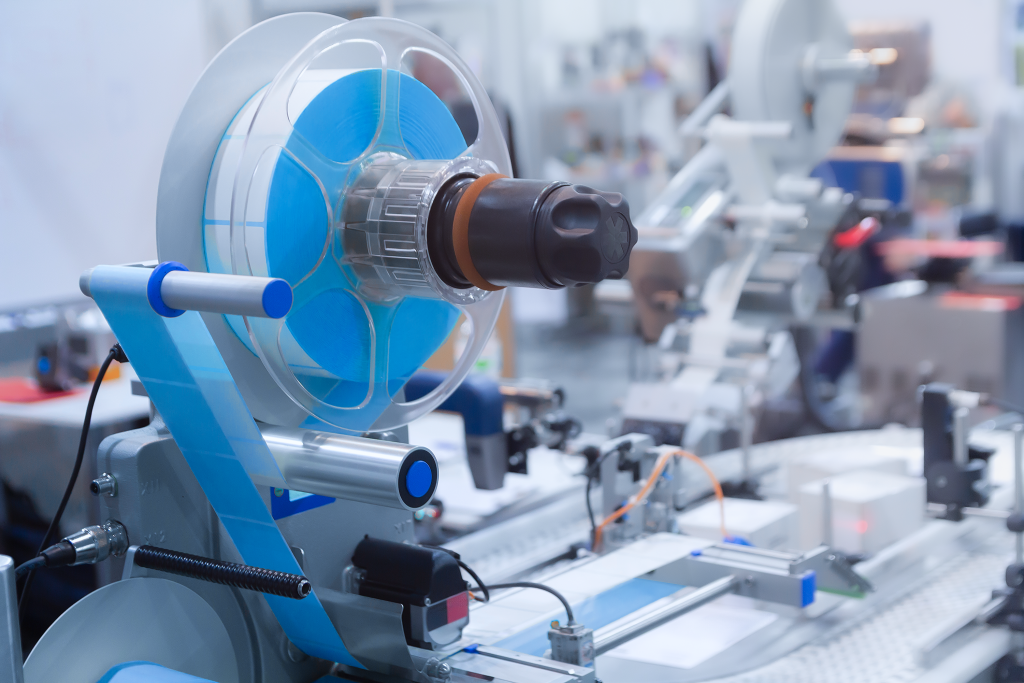
Applicators & Automation
Automated systems introduce another layer of complexity.
Dispensing behavior, roll tension, peel angles, label geometry, liner release, application pressure, and production speed can all influence whether a labeling system performs consistently at scale.
Small inconsistencies that appear manageable early on can quickly become larger operational issues once throughput increases.
Human Workflow & Handling
People are one of the largest variables in labeling performance.
Labels may be applied differently across operators, exposed to repeated cleaning cycles, handled with gloves, scanned under time pressure, or removed and replaced during normal workflow activity.
Even when the label material itself technically performs correctly, poor usability can still create operational inefficiencies, inconsistent application, scanning issues, or workflow disruption.
Operational usability matters just as much as technical adhesion performance.
Environmental Exposure
The operating environment continuously influences long-term label reliability.
Heat, cold, moisture, chemicals, disinfectants, abrasion, UV exposure, and long-term handling can all alter how materials, adhesives, and printed information perform over time.
In controlled environments such as semiconductor manufacturing and pharmaceutical production, additional factors such as particle generation, outgassing, and adhesive residue may also become critical.
Consulting backed by real manufacturing
Many companies can recommend labels.
Many companies can manufacture labels.
Far fewer can evaluate, prototype, refine, and scale labeling systems within real operating environments.
CleanMark combines all three.
Because we both evaluate and manufacture, recommendations are not separated from execution. Prototype development, testing, refinement, and production can happen within a connected process designed around how the labeling system will actually be used.
Experience built in demanding environments
Supporting contamination-sensitive workflows across semiconductor, pharmaceutical, medical device, laboratory, and industrial manufacturing has exposed CleanMark to some of the industry’s most demanding labeling requirements.
Over decades of solving real-world labeling challenges, that experience has shaped how we evaluate materials, adhesives, print systems, workflow compatibility, environmental exposure, and long-term operational reliability.
The result is a consultative process designed around reducing risk before labeling problems become larger operational problems.
Real-world examples
Semiconductor
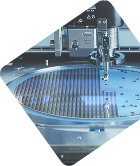
Wafer box labels used in controlled environments began leaving residue after extended dwell time, creating contamination concerns during handling and storage.
CleanMark developed a construction designed to minimize residue while supporting cleanroom handling and traceability requirements.
Pharmaceutical
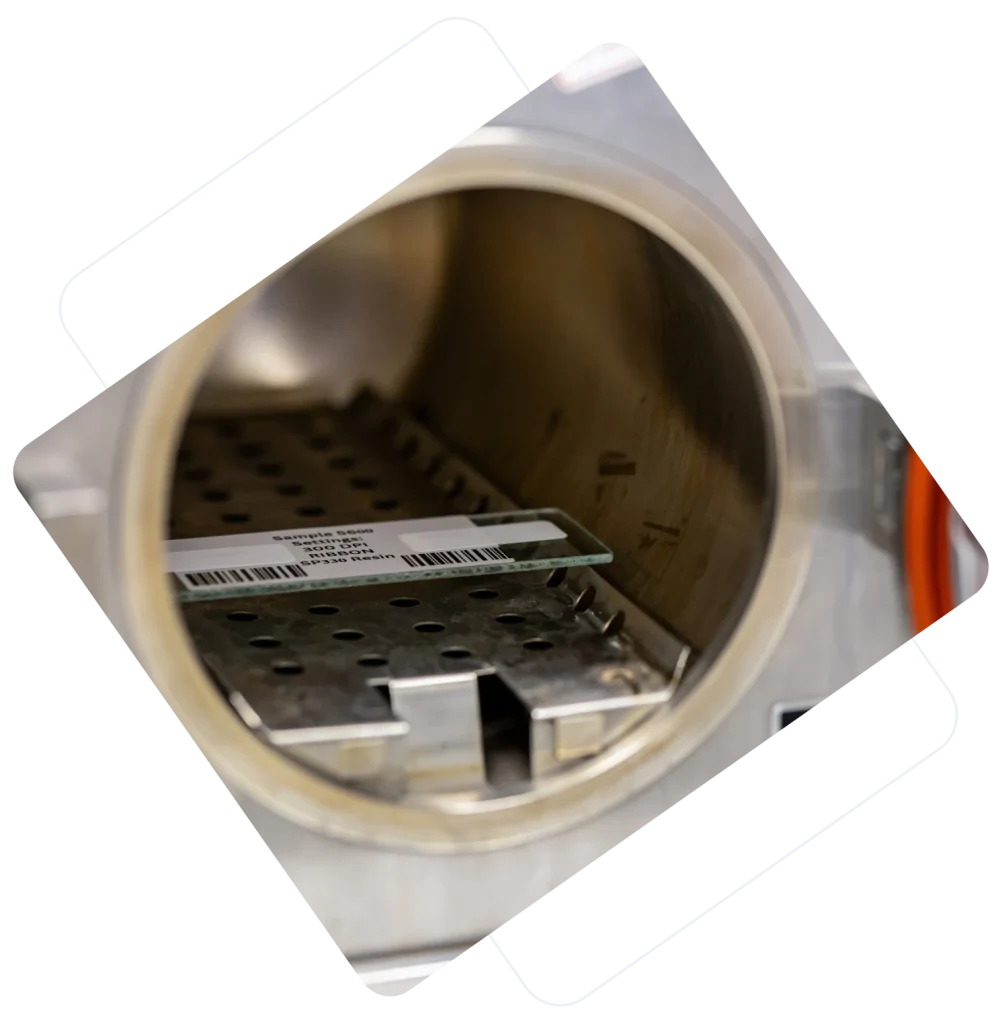
Labels entering an aseptic workflow needed to be sterilized after production without introducing contamination risk.
They also needed to remain adhered during ultra-low temperature storage and maintain legibility after repeated IPA wipe-downs.
Medical Device
A sterilization workflow required a way to visually confirm exposure to the sterilization process while still supporting printed product and traceability information within limited label space.
CleanMark incorporated a gamma-indicating ink directly into the label design so sterilization verification and traceability could function together within the same workflow.
Industrial Manufacturing
High-temperature and abrasive operating conditions created durability challenges that standard label constructions could not withstand long term.
CleanMark developed a durable label construction designed to maintain adhesion and readability throughout the lifecycle of the application.
How the process works
Chemical exposure changes drastically from industry to industry. That’s why we have label designers who are experts in your industry. They’ll work with you to create a custom label that performs exactly how you need it to, day in and day out. The goal is not to create a complicated consulting engagement. The goal is to reduce uncertainty and help implement a labeling system that performs reliably under real operating conditions.
Discovery
We start by understanding the environment, workflow, surfaces, print systems, handling conditions, operational goals, and long-term performance requirements surrounding the application.
Evaluation
Potential risks, failure points, workflow variables, and compatibility considerations are identified early to help narrow the field quickly.
Prototype
Recommended constructions can be sampled or prototyped for real-world evaluation within the intended operating conditions.
Testing
Labels are evaluated within the actual workflow — including printing, application, cleaning exposure, automation, storage, handling, and long-term use conditions where applicable.
Refinement
Lorem ipsum dolor sit amet, consectetur adipiscing elit. Aenean at placerat massa. In hac habitasse platea dictumst. Fusce egestas suscipit velit, sed volutpat sem consectetur
Production
Lorem ipsum dolor sit amet, consectetur adipiscing elit. Aenean at placerat massa. In hac habitasse platea dictumst. Fusce egestas suscipit velit, sed volutpat sem consectetur
Why CleanMark?
CleanMark works with organizations where labeling reliability directly impacts operations, traceability, contamination control, compliance confidence, workflow efficiency, product integrity, and manufacturing continuity.
Our role is not simply to recommend a label. It is to help customers develop labeling systems that continue performing reliably from prototype through production-scale use.
Prefer to talk it through?
Our team can evaluate your environment, workflow, printers, applicators, surfaces, handling conditions, print requirements, and long-term operating conditions to help identify where labeling risks are most likely to occur.
Whether you are solving a current issue, scaling a process, or developing a new product, we can help simplify the path toward a reliable production-ready labeling system.

