
















/ Cold Storage Labels
Custom cold storage labels
Cold storage labels built for the whole temperature journey.
Custom identification labels for pharmaceutical and biologics
cold chains, cell and gene therapy, and frozen clinical trial
materials—from preparation and storage to transport and use.
Start with what you know. We can review the technical details together.
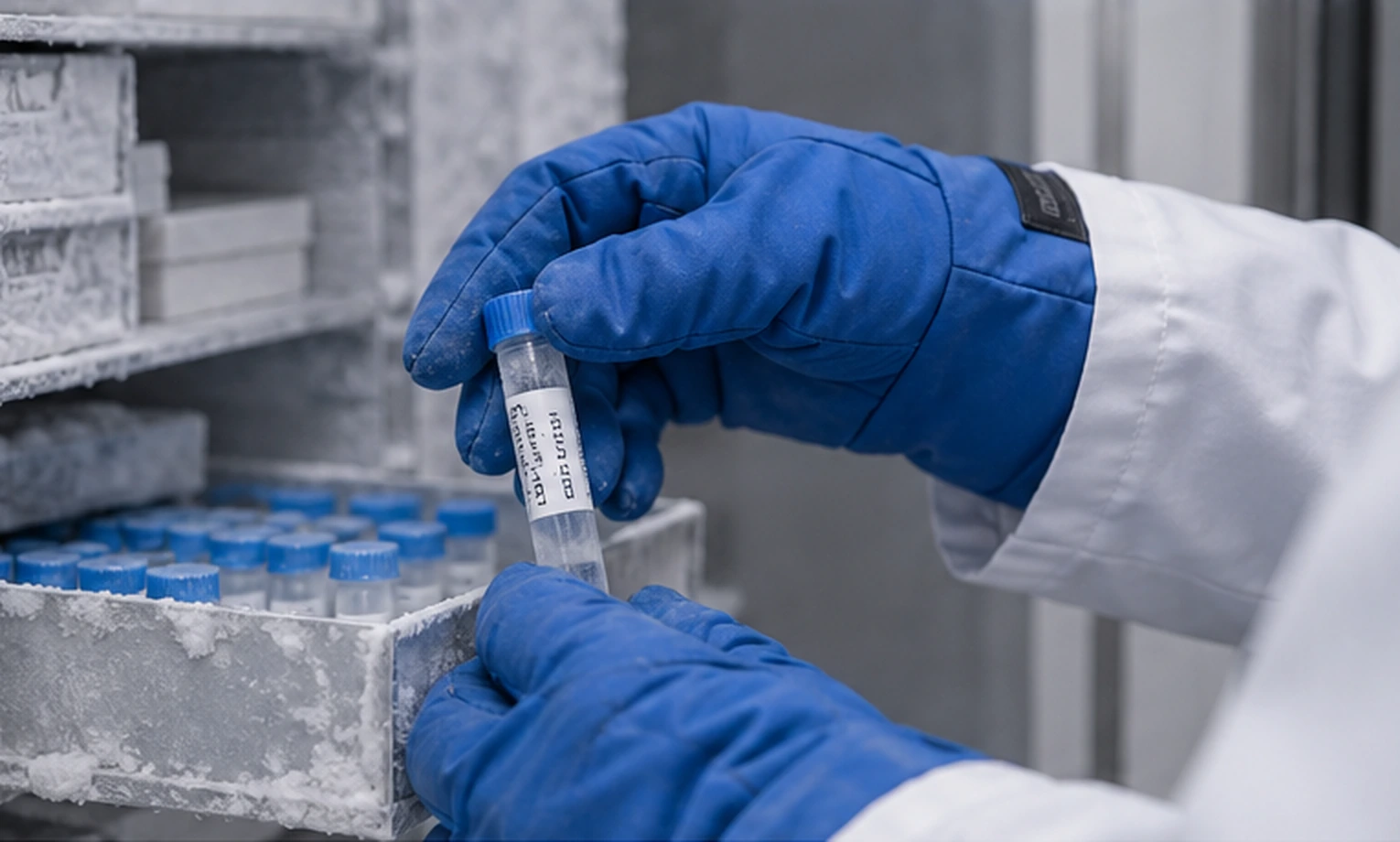
Cold storage applications
Find labels for your storage environment.
Choose your temperature environment to explore the material
considerations and application-specific solutions that matter
to your process.
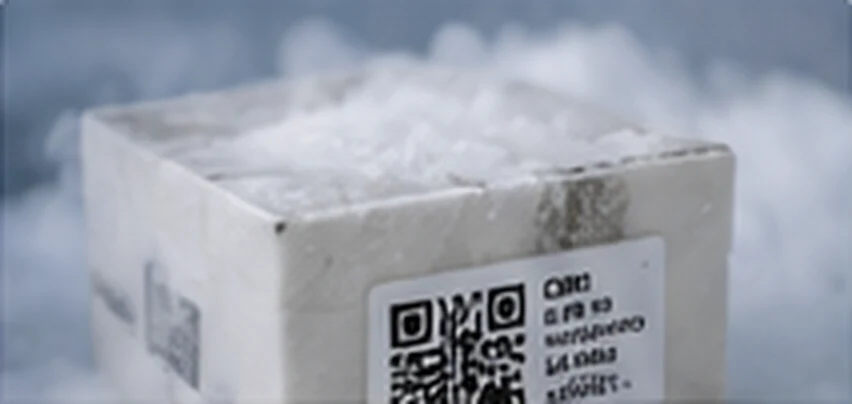
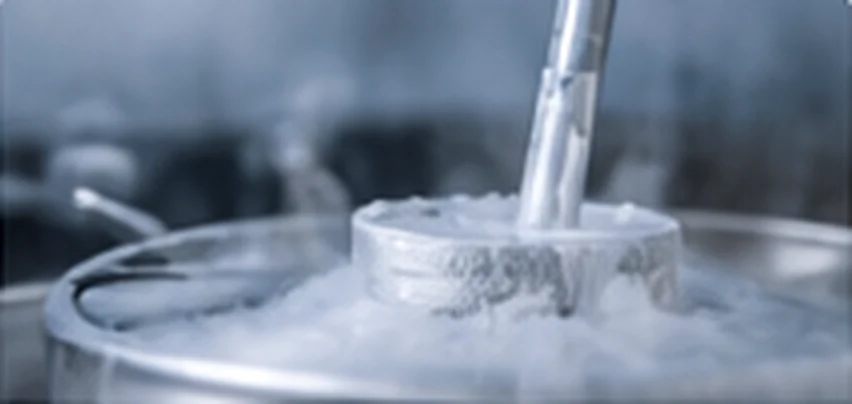
Cold storage label basics
What are cold storage labels?
Cold storage labels are engineered identification materials
designed to retain adhesion and readable information through
refrigerated, frozen, ultra-low, dry ice, or cryogenic conditions.
Performance depends on the container, print system, application
temperature, exposure, and handling—not simply the coldest temperature.

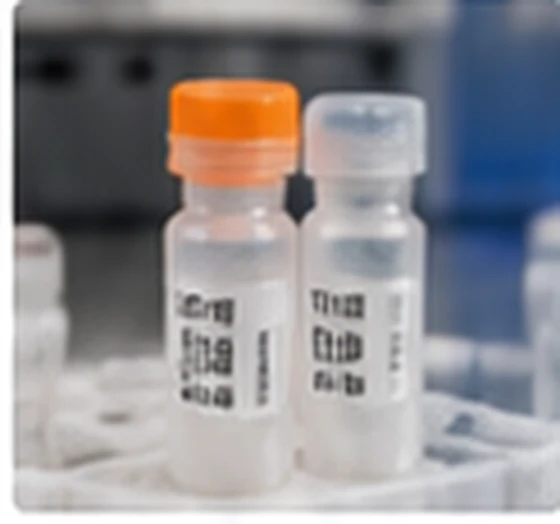
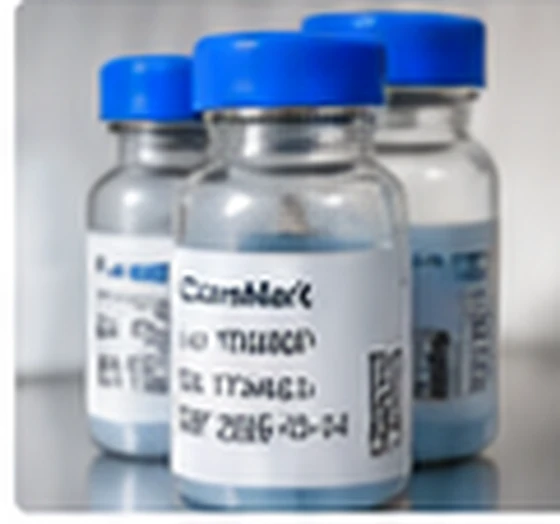
Beyond temperature
Your label may need to do more than withstand the cold.
One application can combine multiple requirements. A cold-rated
construction may also need to resist disinfectants, meet
controlled-environment requirements, or work with existing
production equipment.
Cleaning & controlled environments
IPA resistance,
cleanroom compatibility,
and, where required,
sterile supply.
Printing & identification
Durable barcodes, existing printers and applicators,
and appropriate supply formats.
Temperature changes & handling
Preparation, refrigerated or frozen storage,
transportation, retrieval, and thawing.
One application. Interconnected requirements.
CleanMark helps evaluate them together.
The complete cold chain
One label. Every stage of the cold chain.
Materials may move through different environments. The goal is
to maintain reliable identification through the complete sequence,
with construction performance verified for the actual application.
Prepare & label
Account for printing, container geometry, cleaning,
and the condition of the surface at application.
Store
Consider refrigerated, frozen, ultra-low,
and cryogenic conditions and storage duration.
Ship & transfer
Account for dry ice, packaging contact, handling,
abrasion, and transitions between environments.
Retrieve & use
Protect readability through condensation,
warming, handling, and scanning.
Why reliable identification matters
The work is too important for identification
to become the problem.
Behind every labeled vial, sample, or container is critical work.
When identification becomes unreadable or a label fails, teams
may need to investigate or repeat steps—potentially interrupting
testing, manufacturing, or distribution.
CleanMark engineers labels to help keep identification reliable,
so teams can stay focused on the work that ultimately supports patients.
Configured for your application
Cold-rated is one thing. Ready for your process is another.
The right construction has to work with the container,
printing method, application equipment, cleaning processes,
and supply requirements—not just the storage temperature.
Fit the container
Match material and adhesive to curved vials,
bags, or other surfaces.
Keep your printing process
Consider existing printers, ribbons,
barcode requirements, and print protection.
Work with your applicator
Evaluate dispensing, liner, label geometry,
and hand or automated application.
Integrate requirements
Coordinate cold resistance with chemical exposure,
cleanroom handling, and production supply.
CleanMark brings material engineering, labelstock assembly,
and converting capabilities into the evaluation of
application-specific constructions.
Proven in practice · oncology cryovials
Cleanroom handling. IPA cleaning.
Liquid nitrogen storage. One label.
A pharmaceutical manufacturer developing oncology drugs
needed cryovial labels to withstand cleanroom handling,
an IPA wipe-down, and liquid nitrogen storage.
The earlier construction had two failure modes:
print smeared during cleaning, and label edges lifted after freezing.
CleanMark developed a construction combining a cryogenic
adhesive, IPA-resistant facestock, protected print,
and cleanroom packaging, evaluated against the sequence
of the customer’s process.
The described engineering approach does not by itself
establish a completed customer qualification or production outcome.

Cleanroom handling → IPA wipe-down → Liquid nitrogen
How qualification works
From application requirements to controlled supply.
Define the full workflow, assess a proposed construction,
evaluate samples, and carry approved requirements into production.
Review the complete process.
Document the container, printing,
cleaning, storage, and transport requirements.
Review construction and data.
Evaluate a proposed material and print system
with available technical information.
Evaluate in your process.
Test representative samples using agreed
conditions and acceptance criteria.
Document approved supply.
Agree on specification, traceability,
and applicable change-control requirements.
Common questions
Plan around the complete application.
Can one label support multiple cold environments?
Potentially, but suitability depends on the full process,
application surface, temperature transitions, and the
specific construction. Evaluate the finished label
through the intended sequence.
Can labels be applied to already-frozen containers?
Some constructions are designed for cold-surface application.
Frozen surfaces, frost, moisture, and container materials
need to be considered separately from room-temperature application.
Can labels also resist IPA or support cleanroom requirements?
These requirements can be evaluated together. Chemical exposure,
print durability, material and packaging requirements,
and cold conditions should be included in the evaluation.
Can CleanMark work with existing printers and applicators?
Yes. Printer and ribbon compatibility, label shape,
dispensing, and supply format can be considered
during construction selection and qualification.
Can we request technical information and samples?
CleanMark can help identify a candidate construction,
share available technical documentation, and discuss
representative samples and pricing based on the application.
Your cold storage labeling project
Get the specifications, samples,
or pricing your project needs.
Tell us about your containers, temperature journey, and existing
labeling process. An engineer can help review requirements
and identify an appropriate evaluation path. You do not
need complete specifications to begin.

