


Skip Navigation

Cleanroom labels engineered around your application.

Decades of contamination-sensitive application experience help us identify what matters—so you get reliable identification with less uncertainty and fewer unnecessary iterations.

2–3 minutes · Reviewed by an engineer · Reply within 1 business day

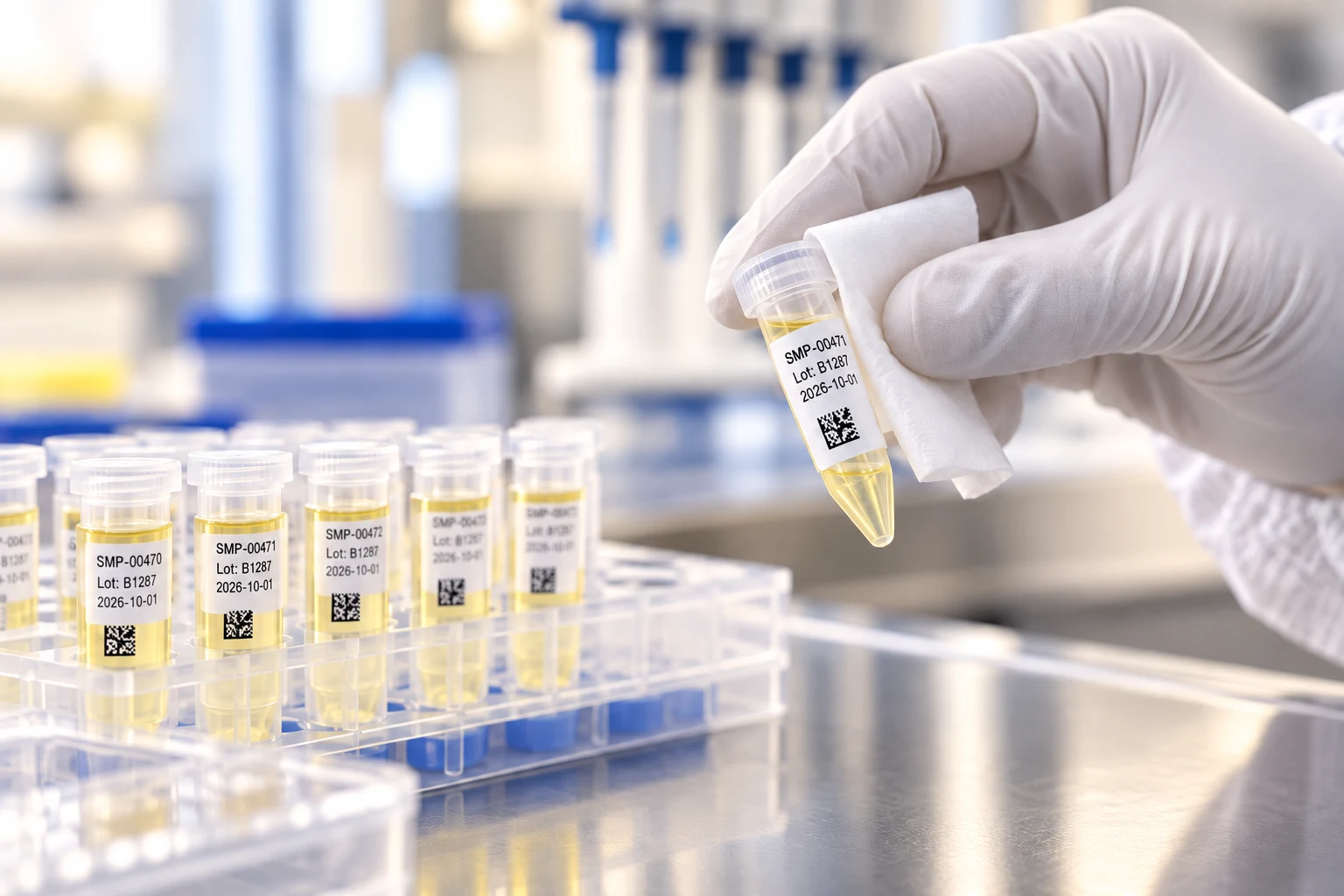
Gloved hand holding a labeled vial in a cleanroom environment
Since the 1990s Cleanroom application learning
Direct technical access People who understand your application
ISO 9001:2015 Certified quality system
Connected U.S. engineering + manufacturing Fewer handoffs from requirement to production

We start where you are.

Whether you’re solving a performance problem, qualifying a new application, adapting to changing requirements or looking for a more reliable supplier, we start by understanding what the application requires.

Something isn’t working

Residue, particle shedding, poor adhesion, print failure or other performance issues.

New application or qualification

Define the requirements and reduce unnecessary trial-and-error before scale-up.

Requirements have changed

A new surface, environment, process, quality requirement or operating condition.

Supplier performance isn’t meeting expectations

Inconsistent performance, long lead times, poor responsiveness or limited technical support.

Reliable identification has to do more than stick.

In a controlled environment, the label has to maintain identification without creating new problems for the process around it.

Stay securely in place

Maintain adhesion through the environmental, handling and cleaning conditions the application requires.

Remove cleanly when required

Come off sensitive containers, equipment or surfaces without leaving unwanted adhesive residue.

Remain readable

Keep printed information, barcodes and variable data legible through handling, cleaning and environmental exposure.

Support contamination control

Materials, adhesives, liners and packaging should be considered in the context of the controlled environment.

When identification performs as intended, the important work around it can continue uninterrupted.

In a controlled environment, the label becomes part of the environment.

Particles, material emissions and identification loss can affect contamination control and process reliability.

These considerations matter across contamination-sensitive applications including semiconductor manufacturing, pharmaceutical production, medical devices, biotechnology and laboratory environments.

Factor Cleanroom-oriented labels General-purpose labels
Materials Selected with particle generation, contamination control and application requirements in mind. Selected primarily for general-purpose labeling requirements.
Adhesive behavior Engineered around permanence, clean removal and surface requirements. Designed primarily around general adhesion and removal.
Environmental performance Evaluated against relevant cleaning, chemical, temperature and controlled-environment requirements. Environmental qualification varies by construction.
Handling & workflow Considers liner, packaging, dispensing and cleanroom entry. Typically optimized around the label function itself.
Technical documentation available based on application Support for qualification, validation and change control.
Material characteristics
Adhesive performance
Chemical compatibility
Print durability
Cleanroom handling & packaging

The right label starts with the application.

We evaluate the variables that matter, understand how they interact and engineer both the construction and geometry around what the application requires.

Label construction

The construction is engineered around performance requirements.

Environment, surface, identification and workflow requirements help determine the materials and construction.

Application variable What we evaluate What it can influence
Environment
Cleaning agents, chemicals, temperature, humidity and contamination requirements Adhesive, facestock, print protection—and potentially the entire construction
Surface
Material, texture, cleanliness, surface energy and removability Adhesive selection and application performance
Identification
Print technology, ribbon, barcode requirements, durability and readability Topcoat, facestock and print-system compatibility
Workflow requirements
Application method, dispensing requirements, handling, storage and packaging Liner, roll configuration, packaging and overall configuration
Exploded label construction showing a clear printed topcoat, facestock, adhesive and release liner
The right construction comes from the complete application — not any one variable in isolation.
Cleanroom label solutions

Cleanroom label performance at a glance

Representative constructions illustrate how materials and performance requirements change across common cleanroom applications. Final construction is engineered around your specific surface, environment, process and workflow.

Permanent Cleanroom General identification in controlled environments Clean-Removable Reusable carriers and temporary identification High-Temperature / Autoclave Heat and steam exposure Cryogenic / Freezer Frozen storage and ultra-low temperatures
Facestock Synthetic polypropylene (low-shedding) Synthetic film (e.g., polypropylene, polyester) Polyester or polyimide (high-temperature grade) Cryogenic-rated synthetic film
Adhesive Permanent, low-outgassing Clean-removable, residue-free High-temperature permanent Cryogenic-grade permanent
Temperature capability −40°C to +121°C −40°C to +121°C Up to +250°CAutoclave: 121°C or 134°C Down to −196°CFreezer grades: down to −80°C
Chemical / process exposure IPA, acetone, DI water and other qualified agents IPA and common disinfectants Steam, IPA and other relevant chemicals IPA, condensation and freeze/thaw cycles
Sterilization compatibility Gamma and/or EtO (where qualified) Autoclave (construction dependent) Gamma (where qualified)

Permanent Cleanroom

General identification in controlled environments

Facestock
Synthetic polypropylene (low-shedding)
Adhesive
Permanent, low-outgassing
Temperature capability
−40°C to +121°C
Chemical / process exposure
IPA, acetone, DI water and other qualified agents
Sterilization compatibility
Gamma and/or EtO (where qualified)

Clean-Removable

Reusable carriers and temporary identification

Facestock
Synthetic film (e.g., polypropylene, polyester)
Adhesive
Clean-removable, residue-free
Temperature capability
−40°C to +121°C
Chemical / process exposure
IPA and common disinfectants
Sterilization compatibility

High-Temperature / Autoclave

Heat and steam exposure

Facestock
Polyester or polyimide (high-temperature grade)
Adhesive
High-temperature permanent
Temperature capability
Up to +250°CAutoclave: 121°C or 134°C
Chemical / process exposure
Steam, IPA and other relevant chemicals
Sterilization compatibility
Autoclave (construction dependent)

Cryogenic / Freezer

Frozen storage and ultra-low temperatures

Facestock
Cryogenic-rated synthetic film
Adhesive
Cryogenic-grade permanent
Temperature capability
Down to −196°CFreezer grades: down to −80°C
Chemical / process exposure
IPA, condensation and freeze/thaw cycles
Sterilization compatibility
Gamma (where qualified)
Common cleanroom configuration
100% synthetic liner and core
No paper components
Cleanroom-compatible packaging (e.g., double-bagged)
ISO Class 5–7 baseline
Printing options available
Thermal transfer, direct thermal, laser and inkjet (depending on construction)

Representative constructions are shown. Final performance depends on the complete application and process conditions.

Not sure which construction fits your application?

Tell us about the surface, cleaning process, and printer. We’ll recommend a likely construction and identify what still needs testing.

Get a Cleanroom Label Recommendation →
Available formats

Supplied to fit your workflow

Cleanroom labels are available in rolls, continuous rolls, sheets, tags and fanfolded formats, with configuration options to match your equipment and application.

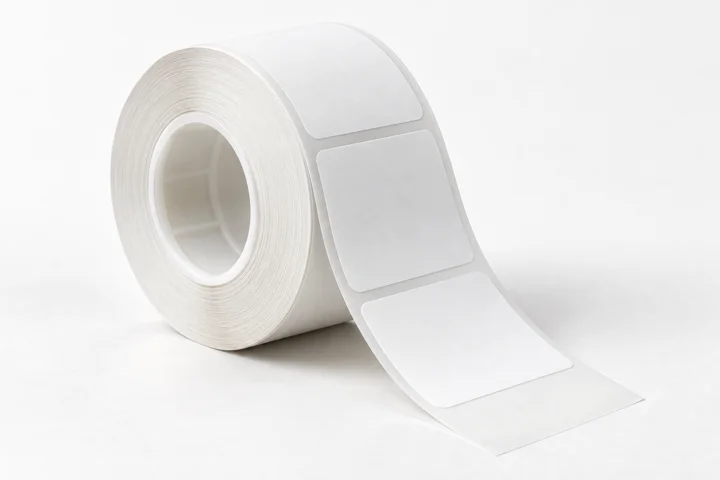
Compact roll of one-column die-cut labels on a white plastic core

Roll labels

Die-cut labels supplied on rolls for printing, dispensing or application workflows.

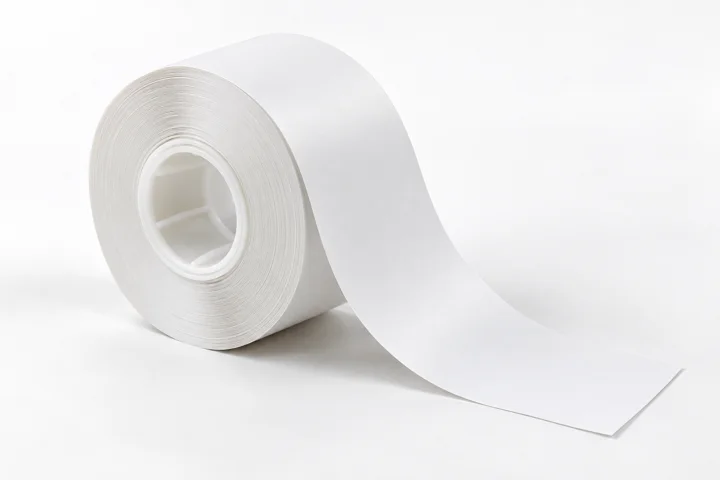
Continuous label material supplied on a white plastic core

Continuous rolls

Continuous material configured around printing and use requirements.

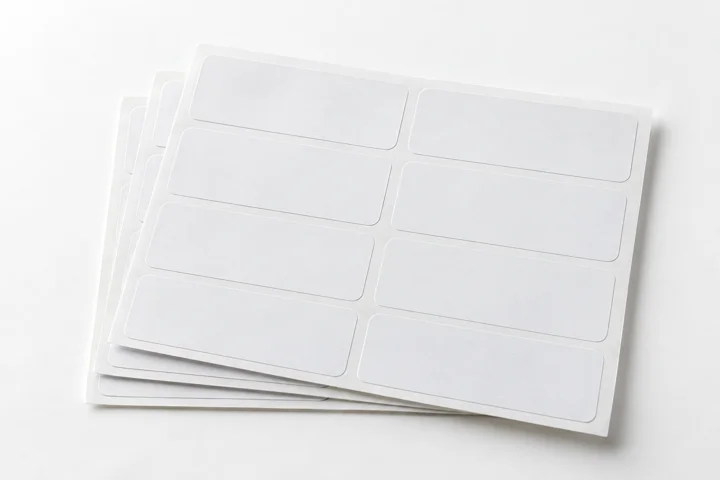
Stack of sheets with multiple die-cut labels

Sheets

Sheeted labels for manual application or workflows that do not require roll-fed dispensing.

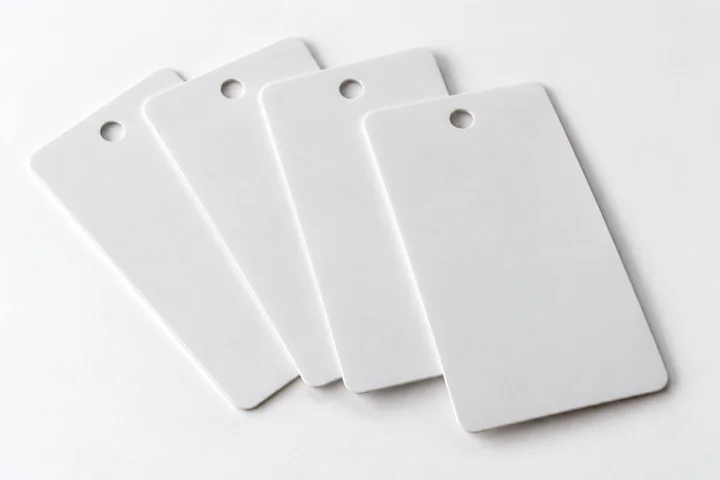
Cleanroom-compatible identification tags

Tags

Durable tags for identification and traceability where an adhesive label is not the preferred format.

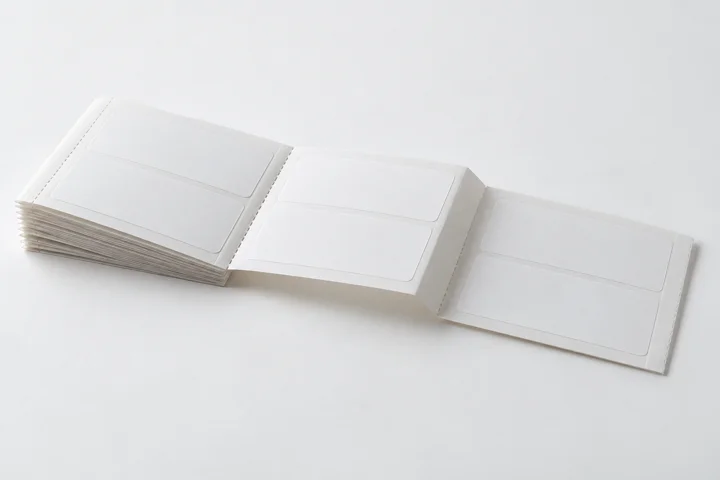
Stack of fanfolded cleanroom labels

Fanfolded

Fanfolded labels for printers and application systems configured to use fanfolded media.

Fitting the label to your application

Size and shape are engineered around the surface and process.

Available labeling area, surface geometry, information requirements and application method all influence final label size, shape and layout. Custom dimensions, shapes, corner radii and die-cut geometries can be engineered around the application.

Available labeling area

Usable space, size constraints and clearance.

Surface geometry

Flat, curved, cylindrical or irregular surfaces.

Information requirements

Barcodes, variable data, text and symbols.

Application method

Manual, semi-automated or automated.

Real-world applications

Built around what you’re labeling.

From vials and tubes to carriers, packaging and process containers, label size and geometry are configured around the application.

Examples of labeled containers, vessels and components used in contamination-sensitive manufacturing and laboratory workflows

The label also has to work through your workflow.

A label can be right for the surface, environment and geometry and still create problems if it doesn’t print, dispense, apply or move into controlled use reliably.

Thermal transfer printer producing a cleanroom identification label
1

Print

The label has to produce clear, durable identification.

  • Printer compatibility
  • Ribbon / ink
  • Barcode + variable-data quality
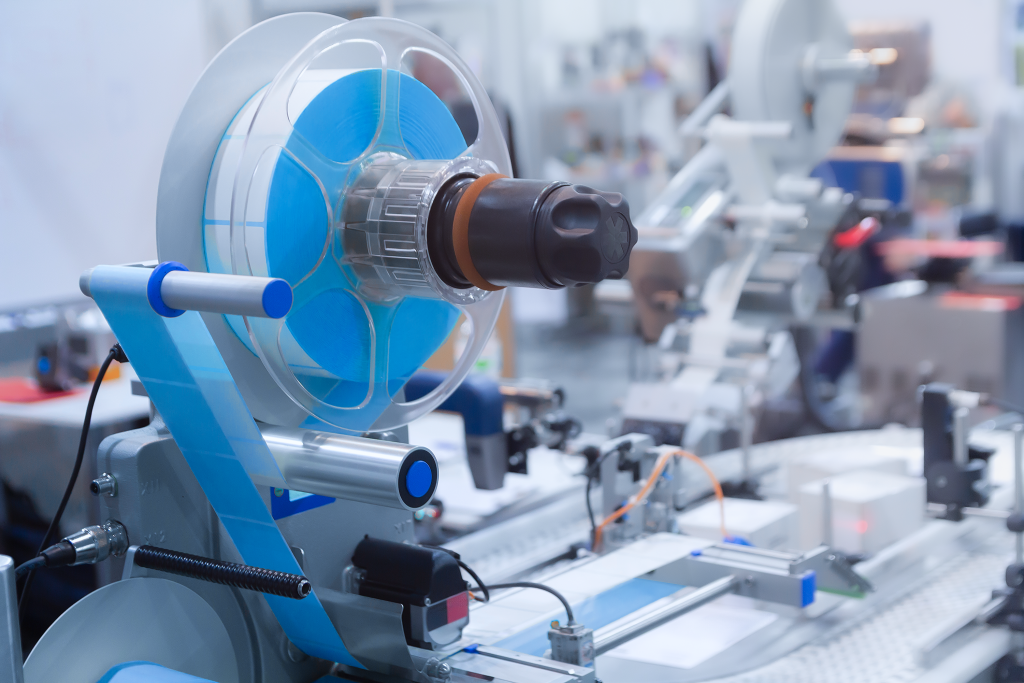
Cleanroom label roll feeding through an industrial dispensing system
2

Dispense

The roll and liner have to run reliably through the equipment.

  • Core + rewind
  • Liner + release
  • Spacing + sensing
Blue-gloved technician applying a cleanroom identification label to a laboratory tube
3

Apply

The label has to reach the surface correctly and consistently.

  • Manual or automated
  • Placement + pressure
  • Surface / application conditions
Labeled laboratory tubes staged in a cleanroom-compatible container for controlled use
4

Controlled use

The finished identification has to remain reliable through handling and cleanroom entry.

  • Packaging
  • Handling + staging
  • Controlled-environment transfer
The solution has to perform from print through controlled use.
Cleanroom technician working in a contamination-sensitive manufacturing environment

Built through real contamination problems.

The problem

In the 1990s, a semiconductor manufacturer was experiencing adhesive residue on wafer boxes in a contamination-sensitive environment.

What the application taught us

The issue wasn’t simply adhesion. Materials, particles, residue, handling and identification performance all interacted.

How that experience matters today

That early work helped shape the application-first approach CleanMark still uses when engineering cleanroom labels.

How CleanMark’s cleanroom experience evolved →

The right solution matters. So does the company behind it.

When you work with CleanMark, you can reach people who understand your requirements, get answers from the team closest to the work, and know that decisions made during evaluation stay connected through production. Our technical, customer-support and manufacturing teams work together around your needs.

Direct access

Work directly with CleanMark team members who understand the technical and operational requirements behind your project.

Faster answers

Questions move quickly to the CleanMark team member best positioned to resolve them and keep your project moving.

Fewer handoffs

Your requirements and technical decisions stay connected as the solution moves from evaluation into production.

Follow-through

What we agree to during evaluation carries through to production, delivery and ongoing support.

One CleanMark team from requirements through production. A better solution and a better experience getting there.

Tell us what you know. We’ll help determine the rest.

You don’t need to have the label figured out before contacting us. Share what you know, and we’ll help identify the next step.

What helps us get started
Surface Polypropylene container
Environment Controlled / cleanroom
Cleaning IPA wipe-down
Printing Thermal transfer
Need Clean removal
What happens next
1

Requirements review

Clarify the requirements and open questions.

2

Candidate solution

Identify a likely construction and configuration.

3

Evaluation

Determine the testing or qualification path.

4

Production-ready solution

Finalize the confirmed specification.

Get a Cleanroom Label Recommendation →
Prefer to talk it through? Schedule a conversation →
Already have a complete specification? Request pricing →

Common questions.

Quick answers to the most common questions about cleanroom labels.

What are cleanroom labels?

Cleanroom labels are labeling solutions designed for contamination-sensitive controlled environments. Their materials, adhesives, liners, printing and packaging are selected around the application to help reduce risks such as particle generation, adhesive residue, material emissions and identification failure.

What makes a label cleanroom compatible?

Cleanroom compatibility depends on how the label performs in its intended environment. Factors can include particle generation, material and adhesive behavior, clean-removal requirements, chemical exposure, print durability, liner performance and controlled handling or packaging.

Why can standard labels fail in a cleanroom?

Depending on their construction, general-purpose labels may introduce particles, residue or material emissions, or lose adhesion and readability after cleaning, chemical exposure, moisture, temperature changes or routine handling.

What is the difference between a cleanroom label and a sterile label?

Cleanroom labels are designed around contamination-sensitive environments. Sterile labels are sterilized and packaged to maintain sterility. Depending on the application, a label may need to be cleanroom compatible, sterile or both.

What should be evaluated before selecting a cleanroom label?

Variables can include cleaning agents and cycles, chemical exposure, temperature, humidity, surface material, removability, printing technology, barcode durability, application method, automation, liner performance, roll configuration, packaging and storage.

What role does the liner play in cleanroom label performance?

The liner can influence particle generation, dispensing reliability, application performance and handling. Liner material, visibility, release behavior and compatibility with manual or automated application may all matter.

What is outgassing and why does it matter?

Outgassing is the release of volatile compounds from materials over time. In contamination-sensitive environments, material or adhesive emissions may contribute to contamination, equipment or product-quality concerns.

Can I use my current printer setup?

Cleanroom label constructions can support common printing technologies including thermal transfer, direct thermal, laser and inkjet where appropriate. Printer, ribbon or ink, facestock, topcoat and application requirements should be evaluated together.

Can cleanroom label size and shape be customized to the application?

Yes. Label size and shape can be engineered around the available labeling area, surface curvature, container or equipment geometry, information and barcode requirements, and the way the label will be applied. Depending on the application, this can include custom dimensions, corner radii and custom shapes.

How are CleanMark cleanroom labels packaged?

Packaging can be configured to support controlled handling, shipping, staging and transfer into contamination-sensitive environments, including double-bagged configurations where required.

How long has CleanMark supported cleanroom labeling applications?

CleanMark has supported cleanroom and controlled-environment labeling applications since the 1990s. Early semiconductor contamination challenges helped shape the application-first approach used today.