







Cleanroom labels engineered for your application.
From material cleanliness and print compatibility to adhesion and durability requirements, we’ll help you identify the right label construction and provide what you need to evaluate it.
Common starting points for cleanroom label projects.
What are cleanroom labels?
Cleanroom labels are identification labels made for cleanrooms and other controlled environments, where ordinary paper labels can shed particles, outgas, or leave adhesive residue.
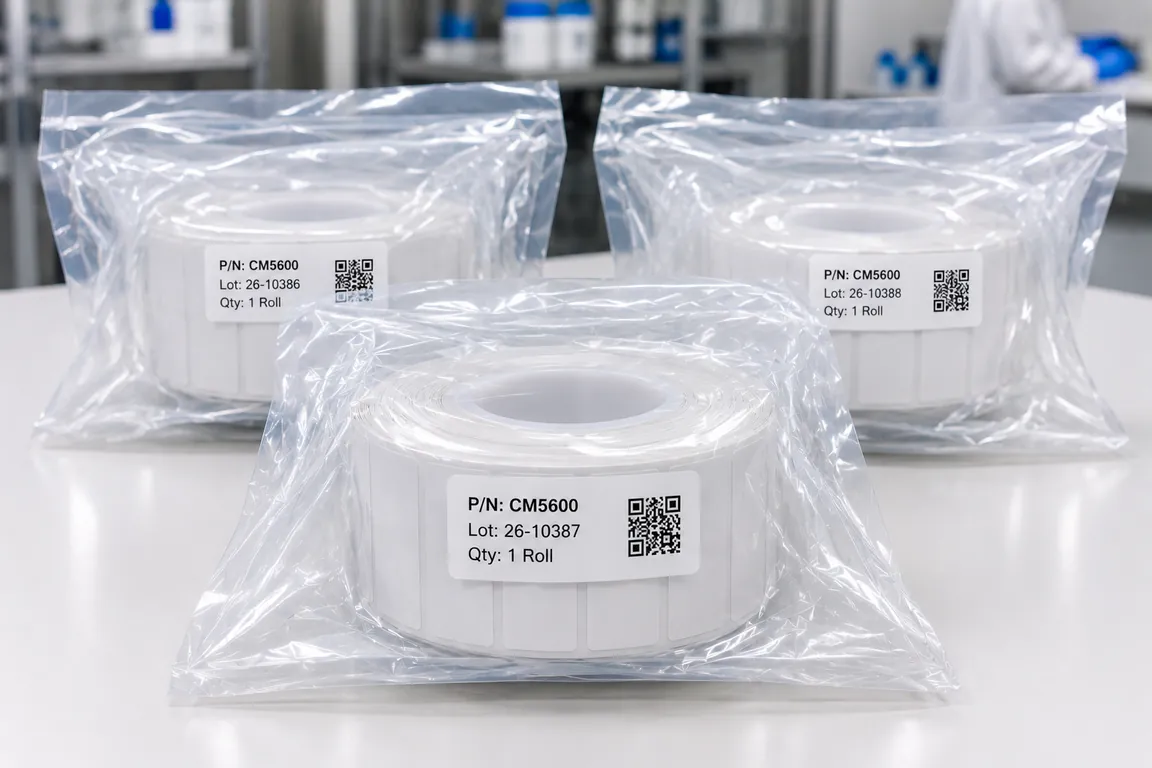
They use non-shedding, low-particulate synthetic materials, low-outgassing adhesives, and low-residue constructions. They are wound on plastic cores instead of cardboard and can be double-bagged for transfer into the cleanroom.
Common applications
- Semiconductor wafer carriers and FOUPs
- Pharmaceutical vials and sample containers
- Cell culture and media containers
- Cleanroom transfer containers
- Laboratory equipment and instruments
- Bioprocess bags and single-use assemblies
Labels that fit your equipment and process.
From roll labels to sheets and tags, we configure dimensions, materials, and packaging to work with your existing printers, applicators, and cleanroom procedures.
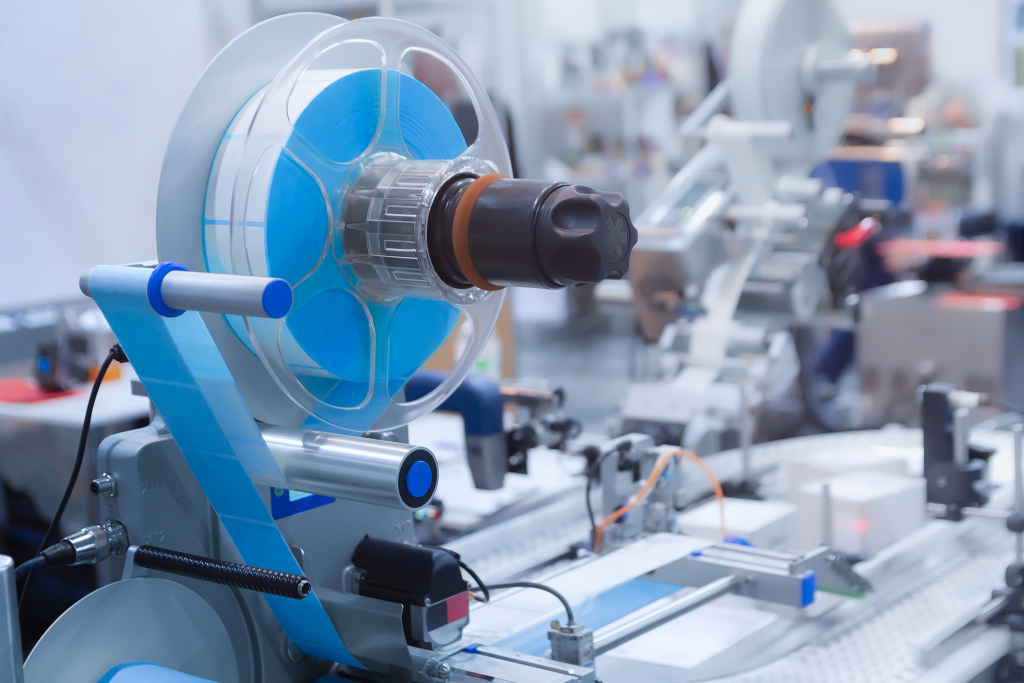
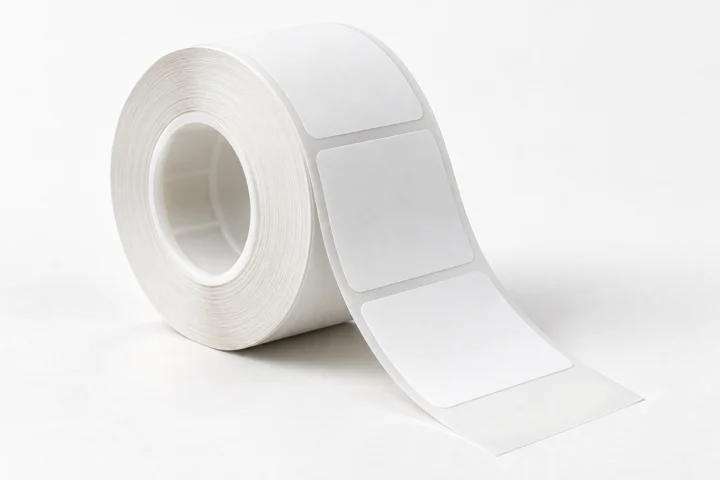 Roll labelsDie-cut for printing, dispensing, or application.
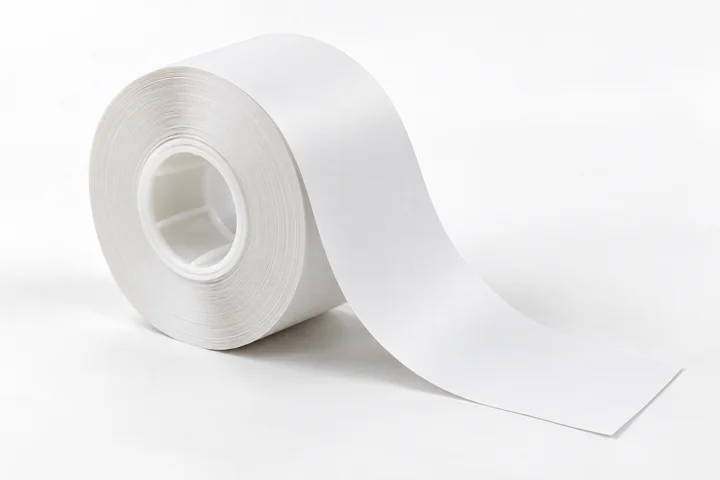 Continuous rollsContinuous media for your printing workflow.
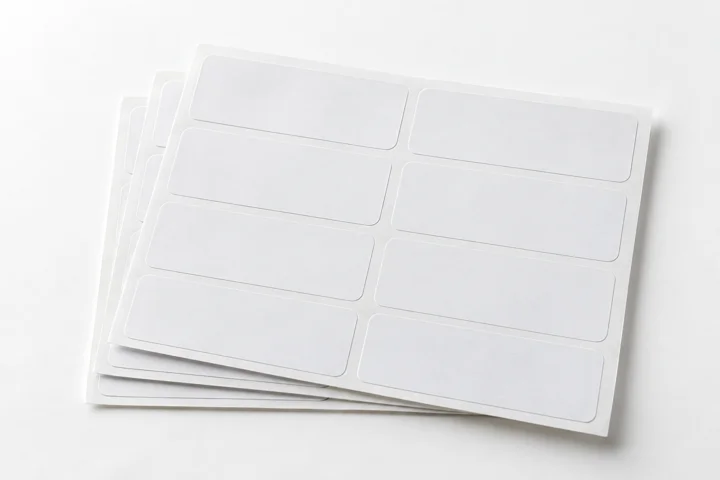 SheetsSheeted labels for manual application.
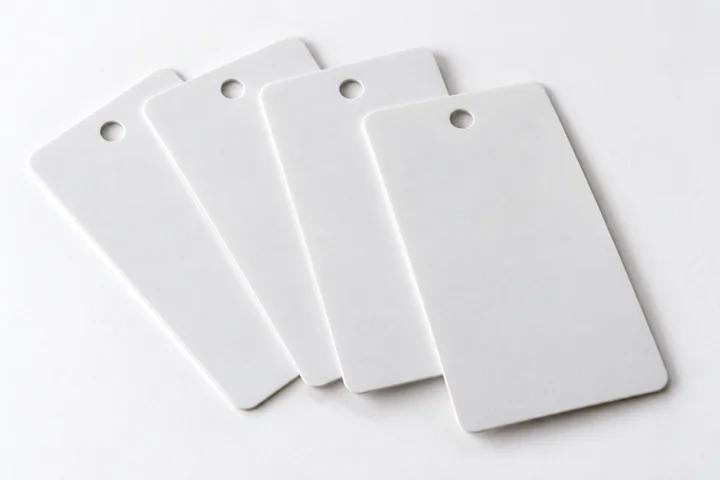 TagsIdentification without an adhesive label.
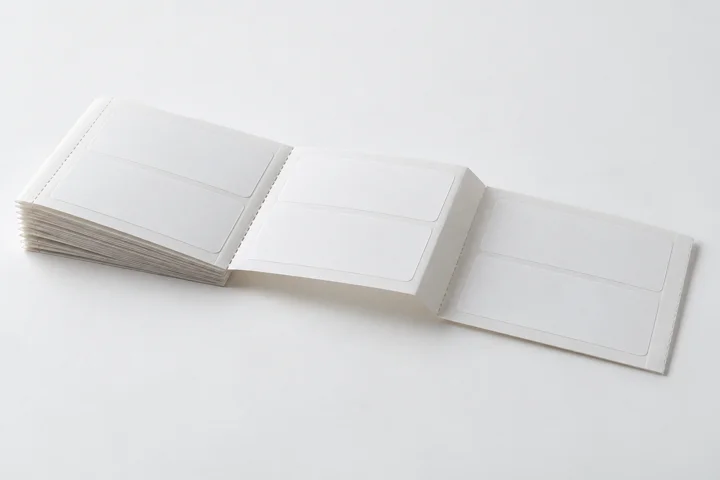 FanfoldedFolded media for compatible equipment.
Your application shouldn’t have to fit the label.
Off-the-shelf labels work when requirements are simple. When they aren’t, the label has to be engineered around four things.
Adhesion for your surface
Labels that stay put for long-term tracking, or peel off cleanly when they need to.
Solves lifting on curved or textured surfaces, and leftover residue.
Fits your printing process
Materials and rolls set up for your printer, ribbon, and variable data, so barcodes print and scan cleanly.
Solves faded text and barcodes that won’t scan.
Holds up in your conditions
Constructions evaluated against the cleaning agents, temperatures, and handling your labels will face.
Solves smearing, peeling, or cracking after cleaning or cold storage.
Supply set up for your cleanroom
Roll formats, packaging, and documentation set up for how labels enter and move through your cleanroom.
Solves paper and cardboard entering the controlled area.
Talk through your application with our engineers.
Whether you’re starting from scratch or already have a spec, a conversation brings out the details that decide performance, before they show up in testing.
Pick a time that works for you
From first conversation to an approved specification.
You need a label that performs in your application, without the project taking over your team’s time. We do the engineering legwork, and each stage ends with something everyone involved can review and act on.
-
Step 01: Define
We review your surfaces, conditions, equipment, and procedures, then recommend a construction. Free stock samples typically ship in 1–2 days.
You getA recommended construction, free samples, data sheet, and quote
-
Step 02: Evaluate
Prove the label works in your real cleaning, handling, storage, and printing before you commit. If a sample doesn’t pass, we refine the construction. Custom prototypes take longer and typically involve a fee.
You getTesting guidance and engineering support until a label passes in your process
-
Step 03: Approve
We confirm specifications, pricing, quantities, packaging, and lead time, then manufacture your labels.
You getA confirmed specification and your production labels, on a set lead time
-
Step 04: Support
We hold your approved specification and help evaluate any changes that could affect performance.
You getThe same approved label on every repeat order
Your cleanroom label project
Get a label recommendation.
Your first step: a label construction recommended for your application, and a plan to evaluate it. No commitment, just a clear place to start.
Your recommendation comes with
- SamplesStock samples or a manufactured prototype
- Technical dataData sheet and testing instructions
- QuotationPricing for your quantities
Questions about cleanroom labels.
What buyers usually ask before requesting samples or a quote.
Samples & ordering
Can I get samples before committing to production?
Yes, samples are available to test on your own surfaces before you commit to production. Describe your application and an engineer will recommend a construction and send samples suited to your cleaning, storage, and handling process.
What do you need to quote pricing?
Pricing is based on label size, quantity, printing, supply format, and packaging. Send whatever you know. An engineer will confirm the remaining details and prepare the quotation.
What are your minimum order quantities and lead times?
Minimums and lead times depend on the construction, printing, and packaging your application needs. Both are confirmed with your quotation, and stocked constructions typically ship faster than fully custom ones.
Performance
How are cleanroom labels different from standard labels?
Standard labels are usually paper on cardboard cores, which can shed particles, outgas, and leave adhesive residue. Cleanroom labels use non-shedding synthetic materials, low-outgassing and low-residue adhesives, and plastic cores, and they can be double-bagged for transfer into a controlled environment.
Can cleanroom labels withstand IPA and other cleaning agents?
Yes, cleanroom labels can be built to stay attached and readable through repeated wiping with IPA, bleach, hydrogen peroxide, and other common disinfectants. The right construction depends on the agent, its concentration, and how often the label is cleaned, and we match the label to that combination.
What adhesive options are available?
Cleanroom labels are available with permanent, removable, and ultra-removable adhesives. Permanent adhesives keep labels attached for long-term tracking, and removable options peel cleanly from stainless steel, glass, and reusable containers without leaving residue. We select the adhesive based on your surface, how long the label stays on, and what it goes through before removal.
How can cleanroom labels be printed?
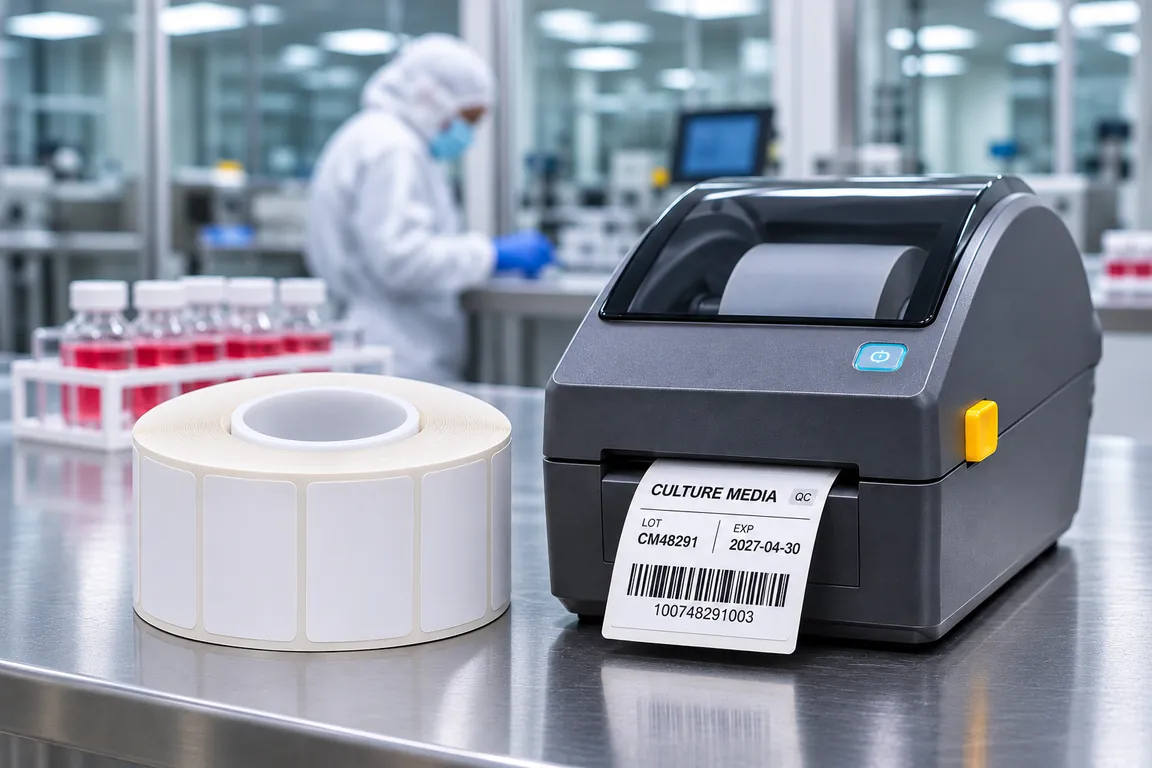
Cleanroom labels can be printed by thermal transfer, direct thermal, laser, or inkjet, or supplied preprinted. Thermal transfer gives the most durable text and barcodes through cleaning. Direct thermal needs no ribbon but is more sensitive to heat and chemicals. We confirm compatibility with your printer model and ribbon or ink.
Supply & documentation
How are labels packaged for cleanroom entry?
Cleanroom labels can be double-bagged and supplied on plastic cores with synthetic liners, so no paper or cardboard enters the controlled area. Packaging is configured to match your transfer and entry procedures.
Are cleanroom labels sterile?
Cleanroom labels are not necessarily sterile; cleanroom-compatible and sterile are separate requirements. When sterility is required, CleanMark supplies gamma-irradiated sterile labels processed in its ISO Class 5 (Class 100) cleanroom.
What documentation can you provide?
Technical data sheets are available for every CleanMark construction. CleanMark is ISO 9001:2015 certified, and we can provide the documentation your qualification process requires.

