Extreme cold changes materials.
The adhesive and facestock need to remain suitable through cryogenic exposure and retrieval.













Custom identification labels for cryovials, biological samples, cell lines, and pharmaceutical materials stored at cryogenic temperatures. Match the construction to your container, application conditions, liquid nitrogen exposure, frost, thawing, and printing requirements.
For cryovials, tubes, cell lines, biologics, genetic materials, and research samples.
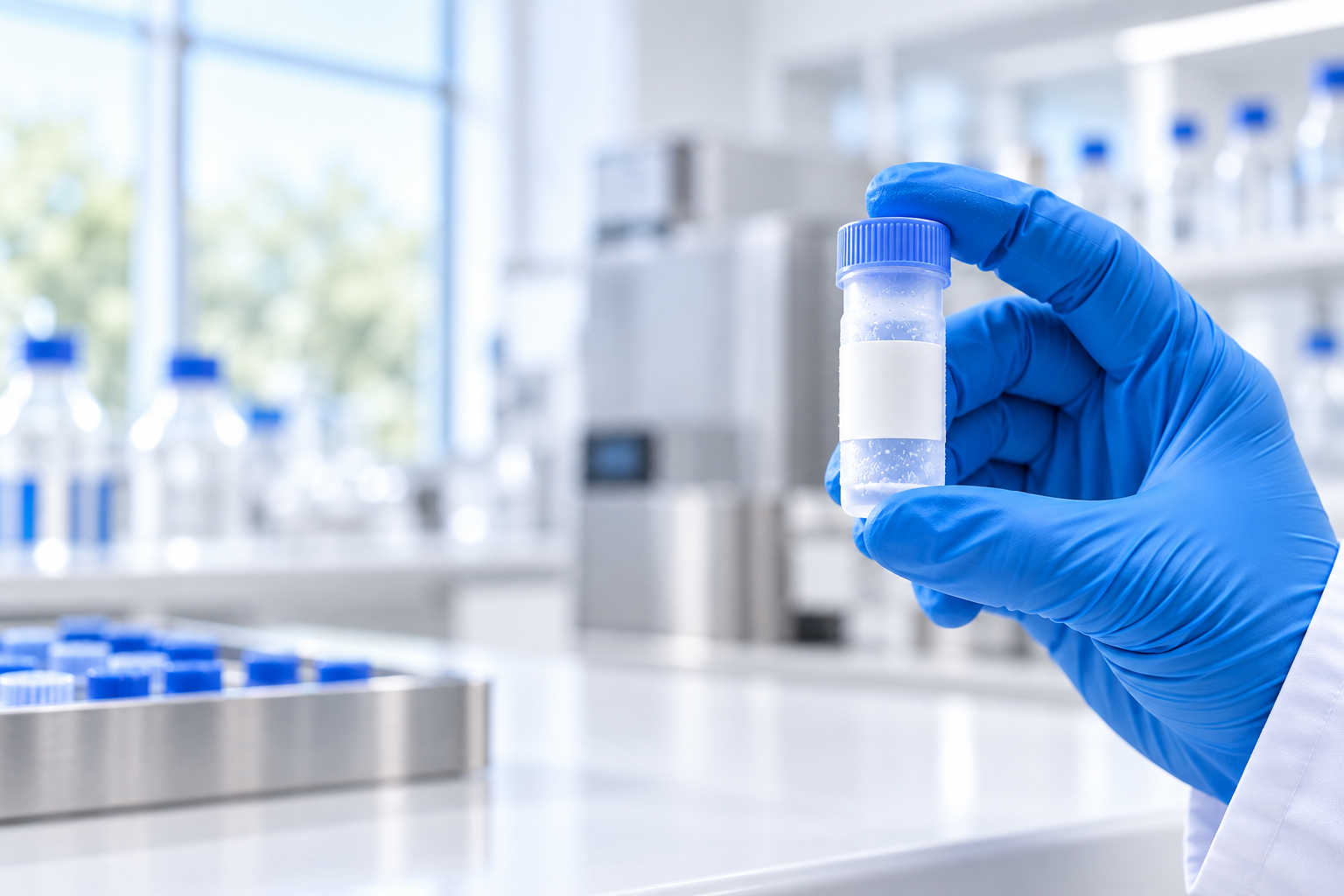
The label has to remain attached and usable through extreme cold, tight container curvature, frost, condensation, retrieval, and thawing. The conditions when the label is applied can matter just as much as the final storage temperature.
The adhesive and facestock need to remain suitable through cryogenic exposure and retrieval.
Small diameters increase the demand on label fit, edge adhesion, and overlap.
Moisture can challenge adhesion, printing, and barcode readability as samples warm.
The complete temperature sequence matters when evaluating the finished construction.
After storage and thawing, the barcode must remain usable when the sample is needed.
Select every challenge in your workflow. Your selections help define the complete application.
Support identification across cell therapy, biotech research, pharmaceutical development, biobanking, and laboratory sample management. Specify the complete temperature and handling sequence; label performance depends on the recommended construction and application.
Maintain sample identity through cryopreservation, long-term storage, retrieval, thawing, and downstream processing.
Keep critical identification attached and readable through cryogenic storage, handling, thawing, and evaluation.
Support long-term identification of valuable biological materials stored in cryogenic environments.
Match the adhesive to the substrate, cryovial diameter, and the temperature and moisture present when the label is applied.
Include vial diameter, overlap, and edge-lift concerns.
Evaluate the facestock, adhesive, printing, and protection through cryogenic storage, frost, condensation, retrieval, and thawing.
Include the actual printer and ribbon when printing onsite.
Consider cleanroom packaging, sterile requirements, chemical exposure, and downstream processing alongside cryogenic performance.
A cell-line cryovial may spend months or years in liquid nitrogen storage before being retrieved for research, testing, or production. During retrieval and thawing, the vial can move rapidly from approximately -196°C to much warmer conditions while frost and condensation develop on the surface.
Throughout that sequence, the label needs to stay attached, remain readable, and keep its barcode scannable.
CleanMark helps match the adhesive, material, and printing to the cryovial and storage process—so identification stays with the sample from cryogenic storage through thaw and use.
Share what you know. Only your first name, last name, and email are required.
Step 1 of 3 — Application
Anything left open can be discussed with our team.
Schedule a conversation about your cryogenic application →
Prefer to talk it through? Schedule a conversation →
Include the storage phase, temperature, container material and diameter, conditions when the label is applied, and what happens during retrieval and thawing. Liquid nitrogen exposure alone does not define the complete application.
Tell us the vial temperature and whether the surface is dry, frosted, or wet. Adhesion during application needs to be evaluated separately from performance after the label is already attached.
The recommended construction should be evaluated for the actual cryogenic environment, including whether storage is in liquid nitrogen vapor or liquid phase and how the sample is handled during retrieval.
Share the vial material, diameter, label dimensions, overlap, and barcode requirements. Tight curvature can affect edge adhesion, label fit, and where identification can be read or scanned.
Evaluate the complete sequence, including cryogenic storage, frost, condensation, thawing, handling, and any chemical exposure. If you print onsite, include your printer and ribbon in that evaluation.
Include your printer, ribbon or other print technology, and when printing occurs in the workflow. The finished construction and printing system should be evaluated together.
These requirements can be considered together. Specify packaging, handling, sterilization, chemical exposure, and downstream processing so the recommendation reflects the complete workflow.

